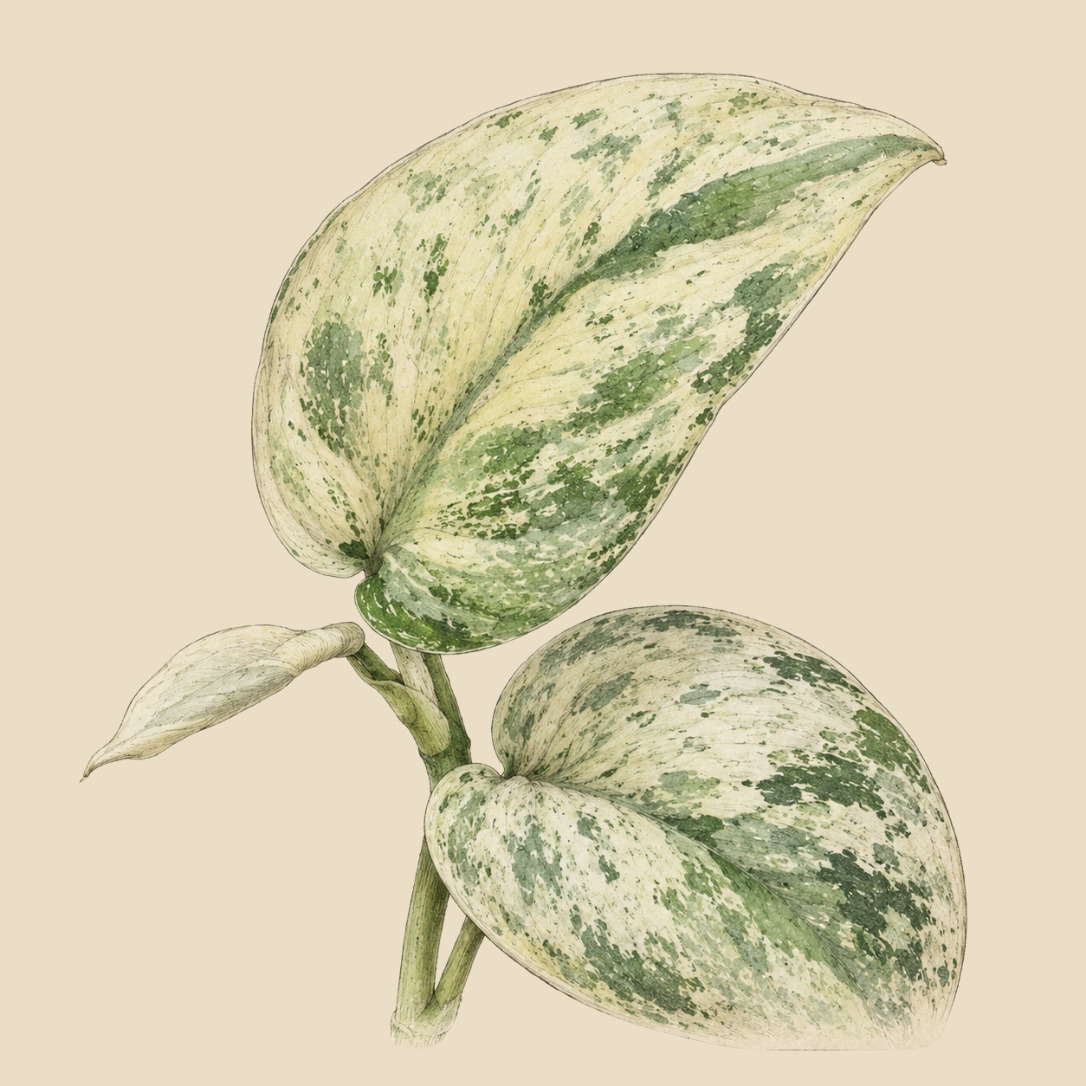
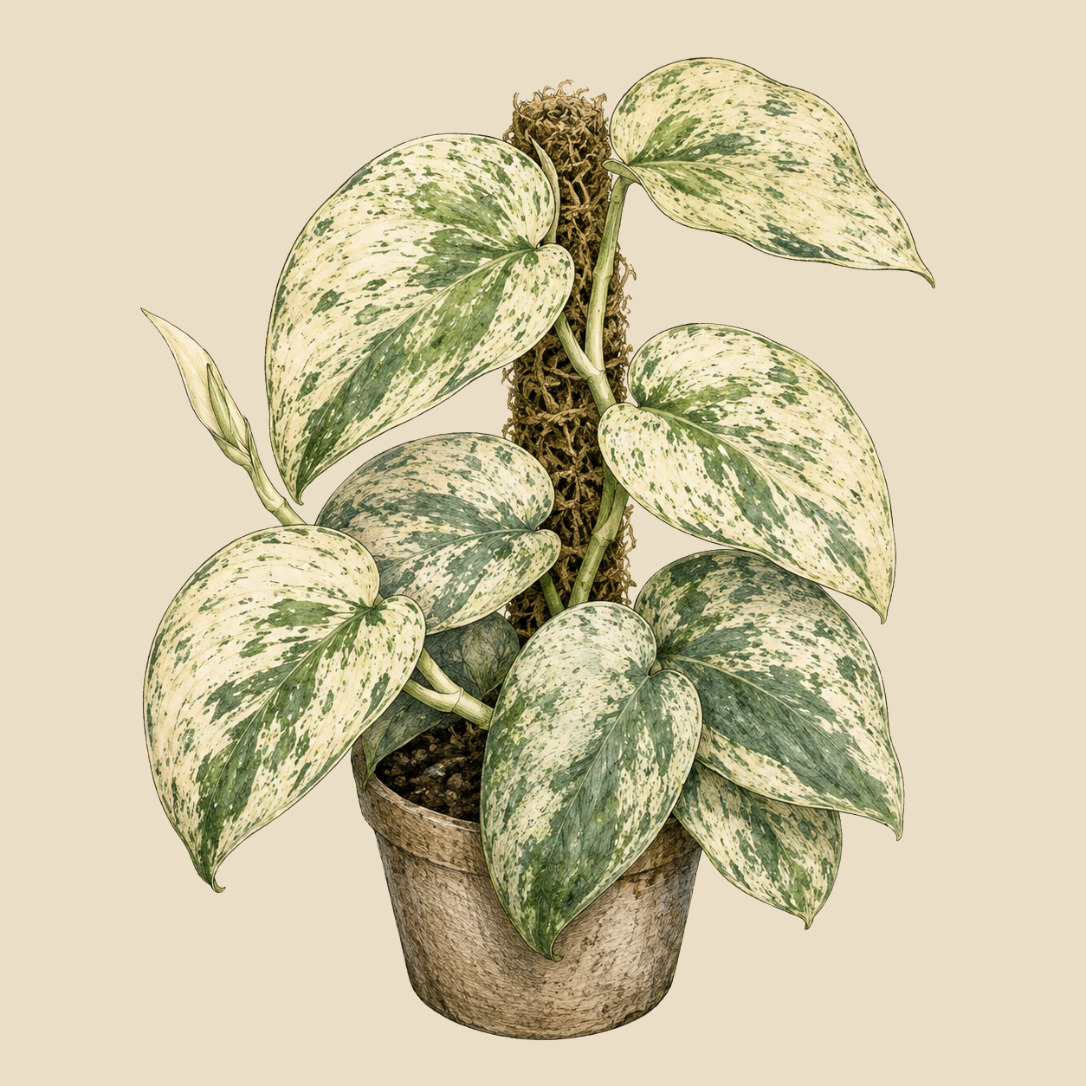
Scindapsus 'Jade Satin Marble'
Tropical Asia and western Pacific; exact range depends on species/cultivar.
First described by Cultivar or hybrid; verify breeder/registrar if needed.
Thick jade-green satin leaves with subtle marbling; often sold as a selected Scindapsus pictus form.
Juvenile plants trail or shingle; climbing support encourages larger leaves and stronger patterning.
A classical name applied to ivy-like climbing aroids; modern usage covers shingling/climbing Asian aroids. Species epithet means 'painted'.
Scindapsus pictus is native to the rainforests of Southeast Asia (primarily Thailand, Malaysia, Indonesia). The genus Scindapsus was long confused with Epipremnum but molecular analysis confirmed them as separate clades within Araceae. 'Jade Satin Marble' is a cultivated variegated cultivar bred for the houseplant trade; its exact parentage is proprietary to the nursery. The species was formally described by Roxburgh in 1832.
This is a cultivated variety of Scindapsus pictus, a semi-epiphytic aroid native to Southeast Asia. It is a trailing plant that prefers bright, indirect light and consistently moist (not waterlogged) soil with excellent drainage. 'Jade Satin Marble' thrives in high humidity (60–80%) and benefits from monthly feeding during the growing season; it is less vigorous than Epipremnum aureum but similarly undemanding if kept warm and out of direct sun.
Aroid mix: 40% orchid bark, 40% coco coir, 20% perlite. Scindapsus pictus dislikes being heavily root-bound and prefers a loose, airy substrate. Repot every 12–18 months in spring when roots circle the pot. Ensure drainage holes are generous; the plant is prone to rot if drainage is poor.
- Susceptible to spider mites and mealybugs in low humidity; root rot if soil remains waterlogged; leaf yellowing from inconsistent watering or cold temperatures; pale variegation in insufficient light
- "Scindapsus pictus is sometimes confused with Epipremnum pinnatum, but differs in its semi-epiphytic habit and slower, more delicate growth
- 'Jade Satin Marble' is a variegated sport with cream and silvery-green marbling distinct from the species form
- Unlike Epipremnum aureum, Scindapsus pictus remains largely juvenile in cultivation and rarely produces the fenestrated mature form seen in the wild"