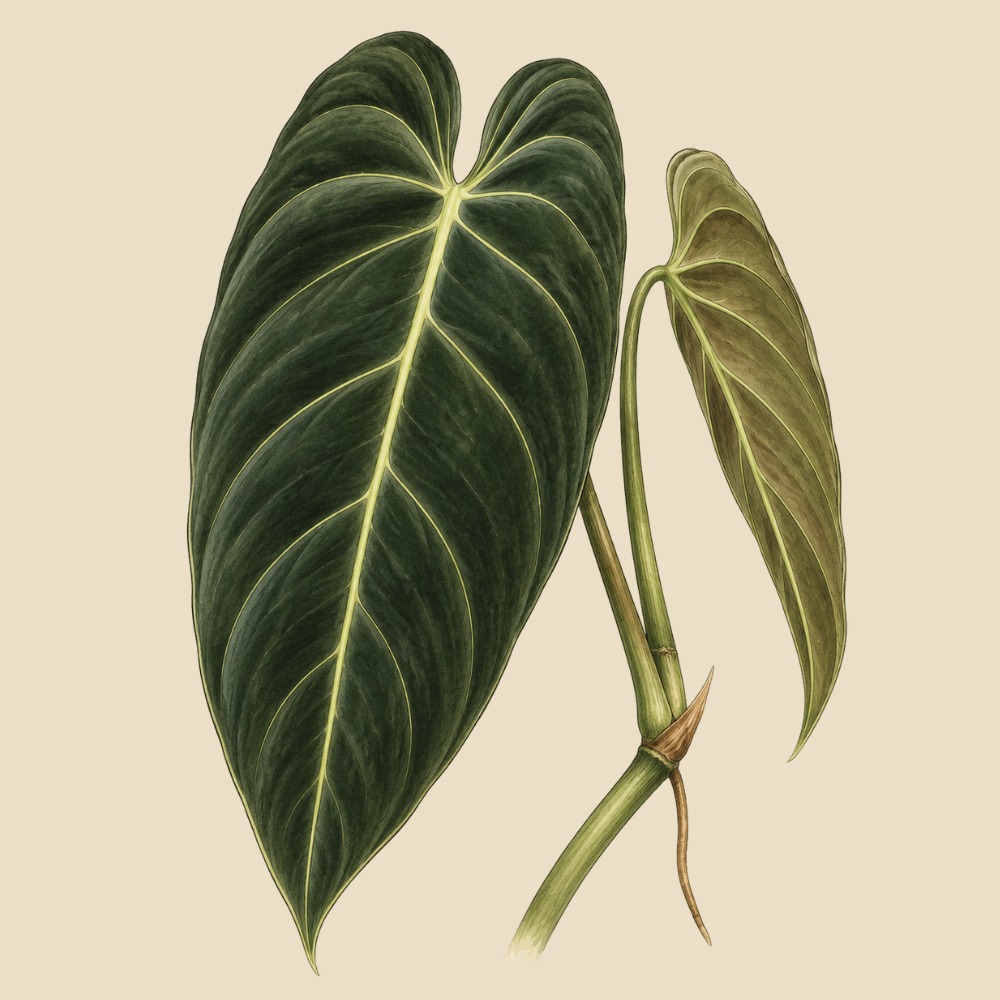
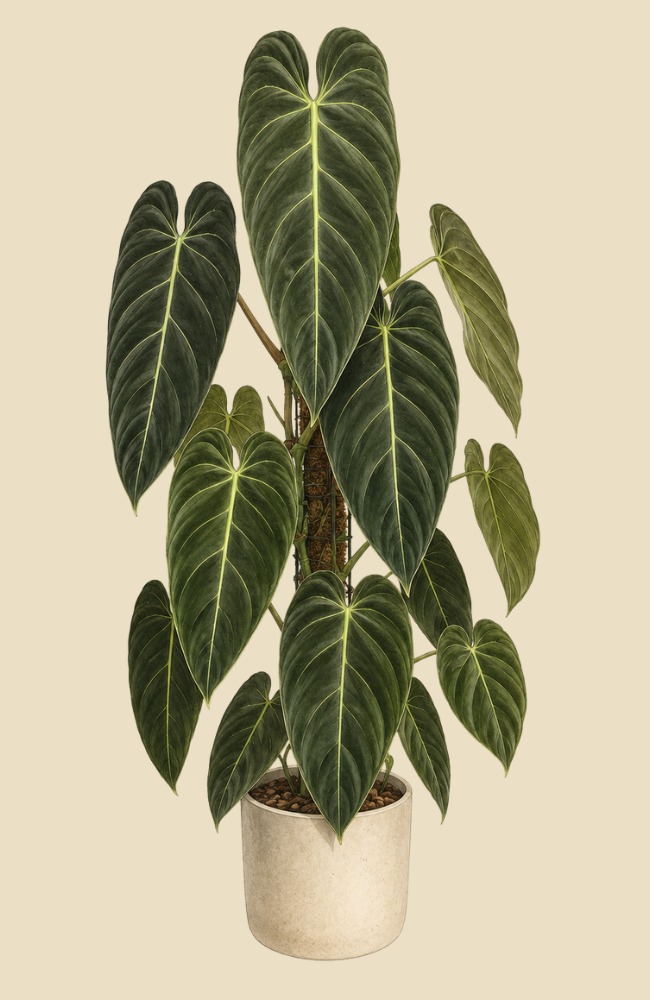
Philodendron melanochrysum
Colombia
Native to the tropical rainforests of Colombia, Philodendron melanochrysum was formally described in the 19th century. It remains relatively uncommon in cultivation compared to other philodendrons but has gained popularity among collectors for its dramatic appearance. The species is a true climber in its natural habitat, using aerial roots to ascend forest trees.
Provide bright, indirect light to maintain the distinctive dark velvet foliage with golden veining. Keep soil consistently moist but never waterlogged; prefers high humidity and benefits from a moss pole or support for climbing growth. Wipe leaves regularly with a soft, damp cloth to enhance the velvet texture and golden highlights.
Monthly during growing season (spring–summer)
- Prone to root rot if overwatered or in poorly draining soil; spider mites and mealybugs in low humidity; leaf browning from hard water or low humidity; slow growth in insufficient light.
- The name 'melanochrysum' combines Greek 'melanos' (black) and 'chrysos' (gold), referring to its stunning dark velvet leaves with golden veining
- Leaves develop deeper color and more pronounced golden veins as the plant matures and receives optimal light
- This species is a hemi-epiphyte in nature, naturally climbing trees in Colombian rainforests using aerial roots