
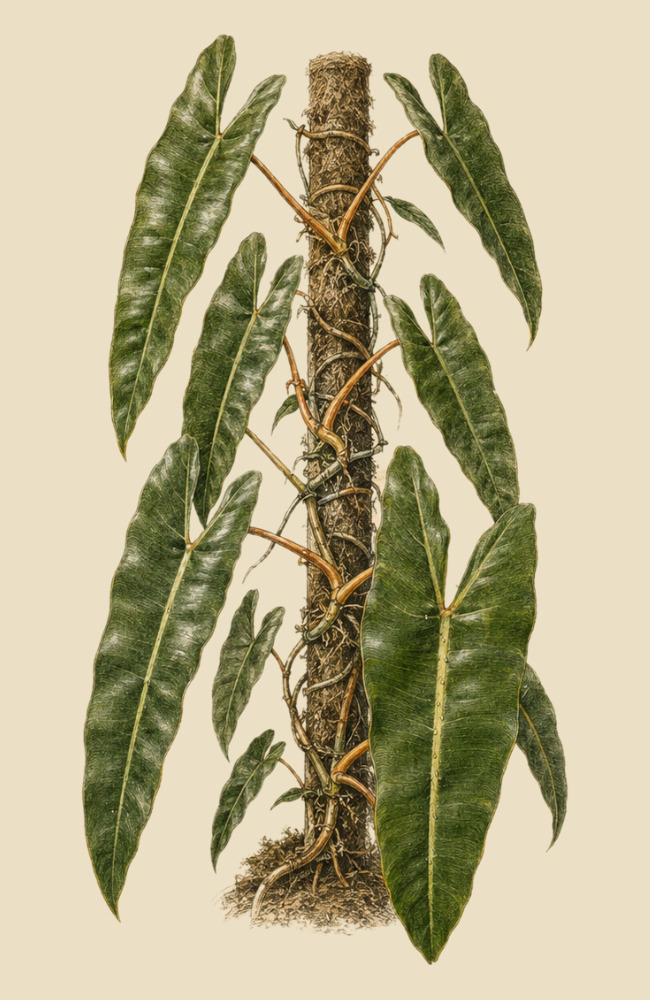
Plate 003
At a Glance
Light Indirect light
Water Every 7 days
Humidity 60–80%
Temp. 18–29 °C
Habit Climber
Growth Fast
Care Moderate
Height 90–150 cm
Add to your collection
species Araceae ◉ Verified
Philodendron billietiae
Billietiae Philodendron
(fil-oh-DEN-dron bil-ee-ET-ee-eye)
At a Glance
Light Indirect light
Water Every 7 days
Humidity 60–80%
Temp. 18–29 °C
Habit Climber
Growth Fast
Care Moderate
Height 90–150 cm
Add to your collection
Origin & Habitat
Base species native to Guianas and Brazil (Pará)
Botanical Notes
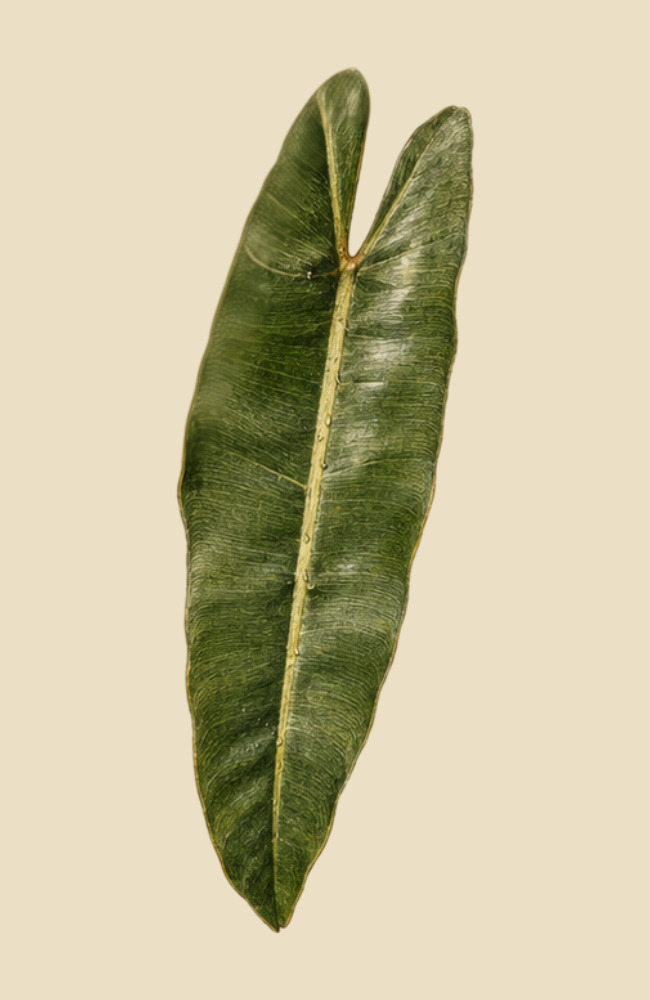
Philodendron billietiae is an accepted species native to the Guianas and Brazil (Pará). It is popular in cultivation for its elongated leaves and orange petioles.
Care Guide
Provide bright indirect light and consistently moist (not soggy) soil to keep this fast-growing climber thriving. Support with a moss pole or trellis to encourage upright growth and larger leaf development. Maintain humidity above 60% and allow soil to dry slightly between waterings to prevent root rot.
Feeding
Monthly during growing season (spring–summer)
Common Problems
- Prone to root rot if overwatered or left in waterlogged soil; susceptible to spider mites and mealybugs in dry conditions; yellowing leaves may indicate overwatering or poor drainage; brown leaf tips often arise from low humidity or tap water minerals.
Notes & Curiosities
- Philodendron billietiae is named in honor of the Belgian botanist Dr. Frieda Billiet, who discovered the plant in 1981.
- This species is known for its stunning orange-red petioles (leaf stems) and bronze-tinged new growth, making it highly sought after by collectors.
⚠ Toxicity: toxic to pets, toxic to humans. All parts contain calcium oxalate crystals. Ingestion causes mouth and throat irritation, swelling, burning sensation, and difficulty swallowing in both pets and humans.
◉ Verified Flag an error