
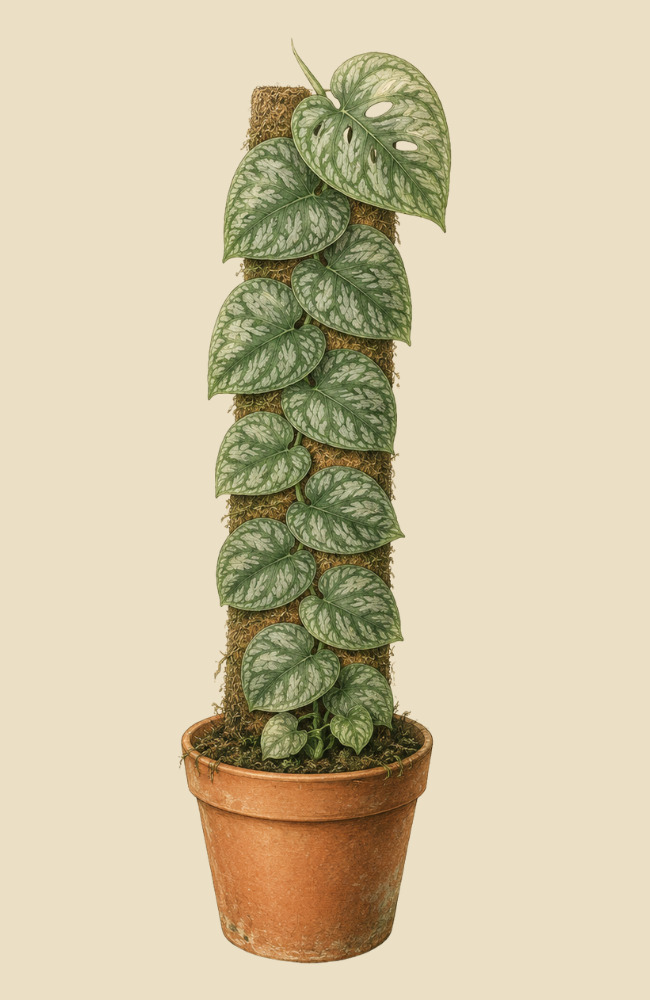
Plate 020
At a Glance
Light bright indirect
Water Every 7 days
Humidity 60–80%
Temp. 18–29 °C
Habit Climber
Growth Moderate
Care Moderate
Height 2–5 m indoors with support
Add to your collection
species Araceae ◉ Verified
Monstera dubia
Shingle Plant · Monstera Dubia
(mon-STAIR-uh DOO-bee-uh)
At a Glance
Light bright indirect
Water Every 7 days
Humidity 60–80%
Temp. 18–29 °C
Habit Climber
Growth Moderate
Care Moderate
Height 2–5 m indoors with support
Add to your collection
Origin & Habitat
Mexico to South Tropical America and Trinidad; wet tropical biome
Description
Juvenile leaves shingle tightly against a support; adult foliage can become larger and fenestrated.
Climbing hemiepiphyte that needs support for best mature foliage.
Botanical Notes
Accepted species in POWO/Kew; common in aroid collections or frequent in Monstera searches. Not a hybrid entry.
Care Guide
Use a chunky, fast-draining aroid mix and provide a moss pole/board where possible. Keep evenly moist but not wet, and increase light gradually for mature foliage.
Repotting
Repot every 1–2 years in spring, or when roots fill the pot. Provide fresh chunky mix and a larger support rather than a much larger pot.
Feeding
Monthly in spring and summer at half strength
Common Problems
- Root rot from overwatering, leaf yellowing from low light or cold, brown edges from low humidity, and spider mites/thrips in dry conditions.
Notes & Curiosities
- A dramatic shingling Monstera that looks completely different as a juvenile and adult.
⚠ Toxicity: toxic to pets, toxic to humans. Contains insoluble calcium oxalate crystals; chewing or ingestion can irritate the mouth, throat and stomach in pets and people.
◉ Verified Flag an error