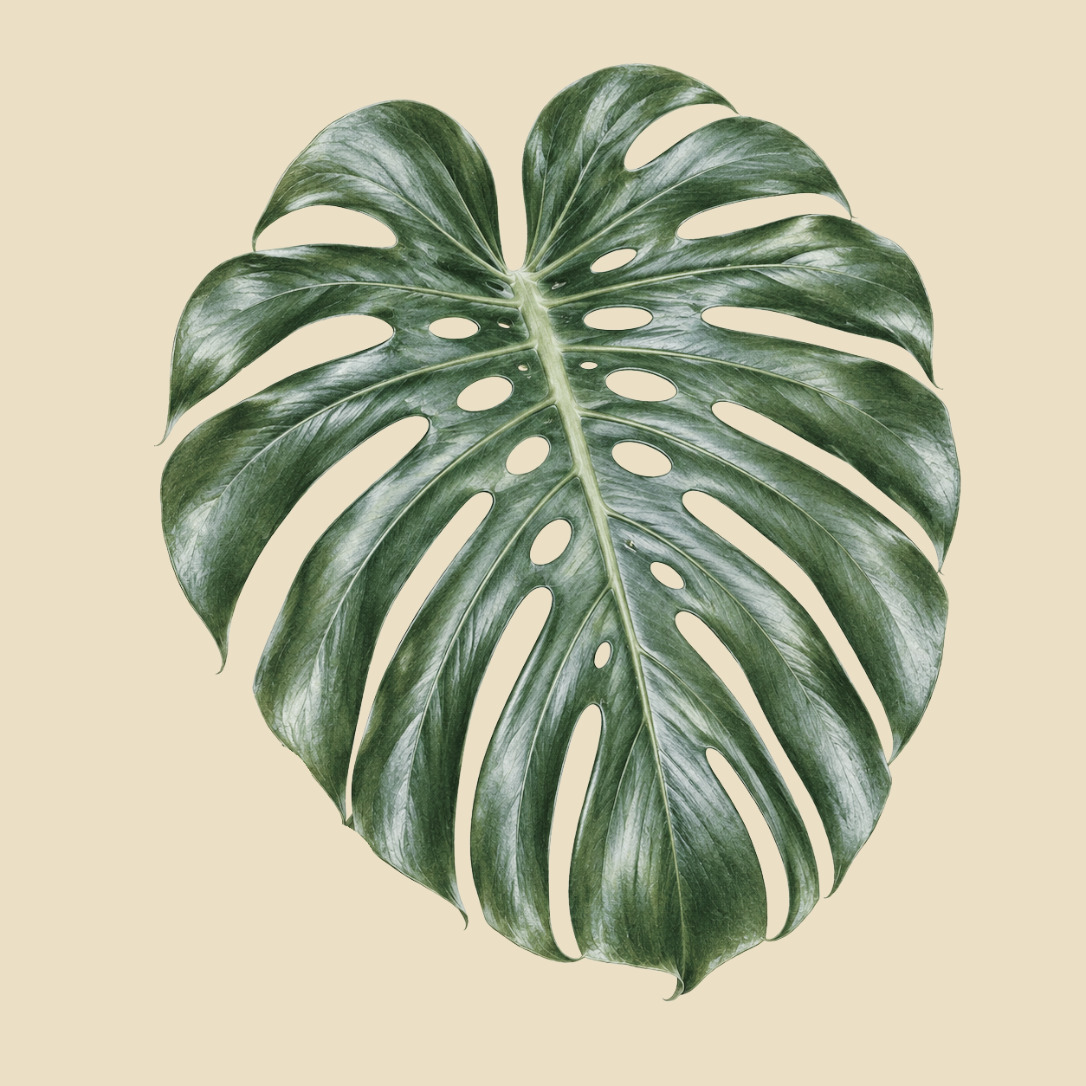
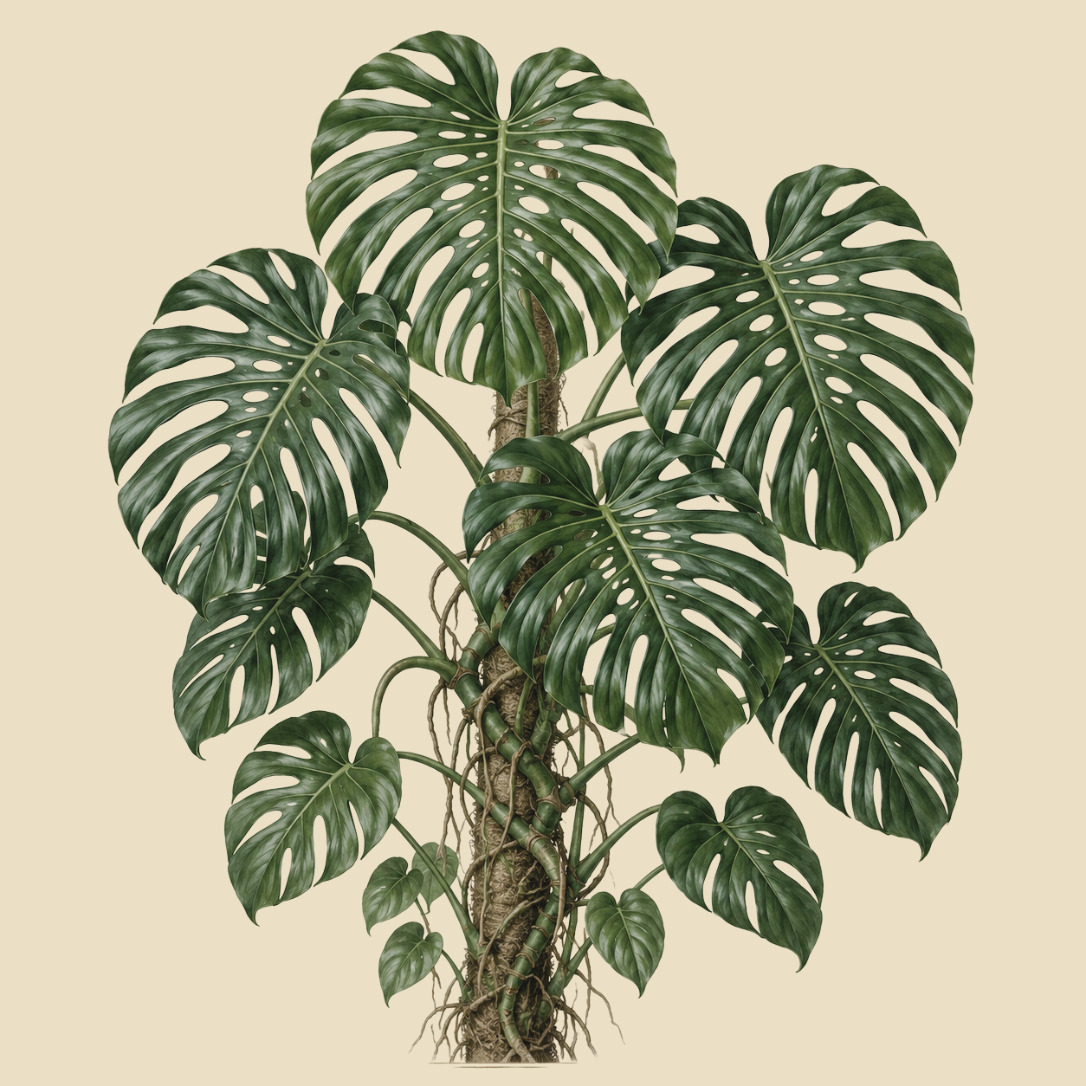
Monstera deliciosa
Mexico (Veracruz, Oaxaca, Chiapas) to Guatemala
Native to the rainforests of southern Mexico and Guatemala, Monstera deliciosa was first scientifically described in the early 19th century. The plant became a houseplant phenomenon in the mid-20th century, particularly symbolizing 1970s interior design. The genus Monstera contains about 45 species, but deliciosa remains the most popular for cultivation. The common name 'Swiss Cheese Plant,' refers to the cheese-like appearance of the fenestrated leaves.
Water when top 1–2 inches of soil are dry; avoid overwatering to prevent root rot. Provide bright, indirect light and a moss pole or support structure to encourage climbing and fenestration. Wipe leaves regularly to maintain their glossy appearance and improve photosynthesis.
Repot every 1-2 years, in spring or early summer.
Monthly during growing season (spring–summer)
- The distinctive holes (fenestrations) are thought to allow wind to pass through large leaves without damage and to help light reach lower leaves.
- The plant's Mexican name 'Monstera' derives from the Spanish word 'monstruo' (monster), likely referring to its large, dramatically lobed leaves.
- Monstera deliciosa produces edible fruit that tastes like a combination of pineapple and banana when fully ripe, though this takes several years to develop indoors.