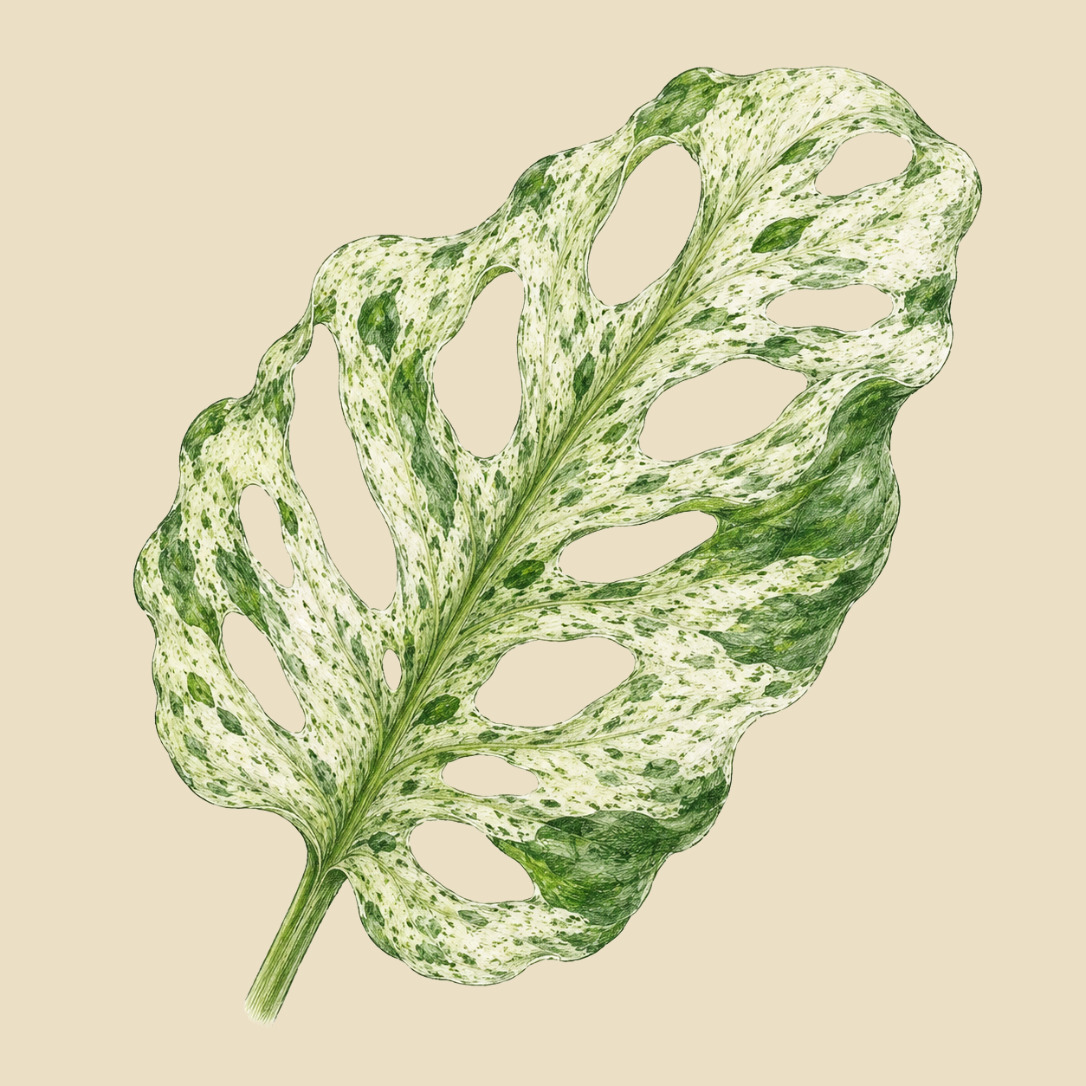
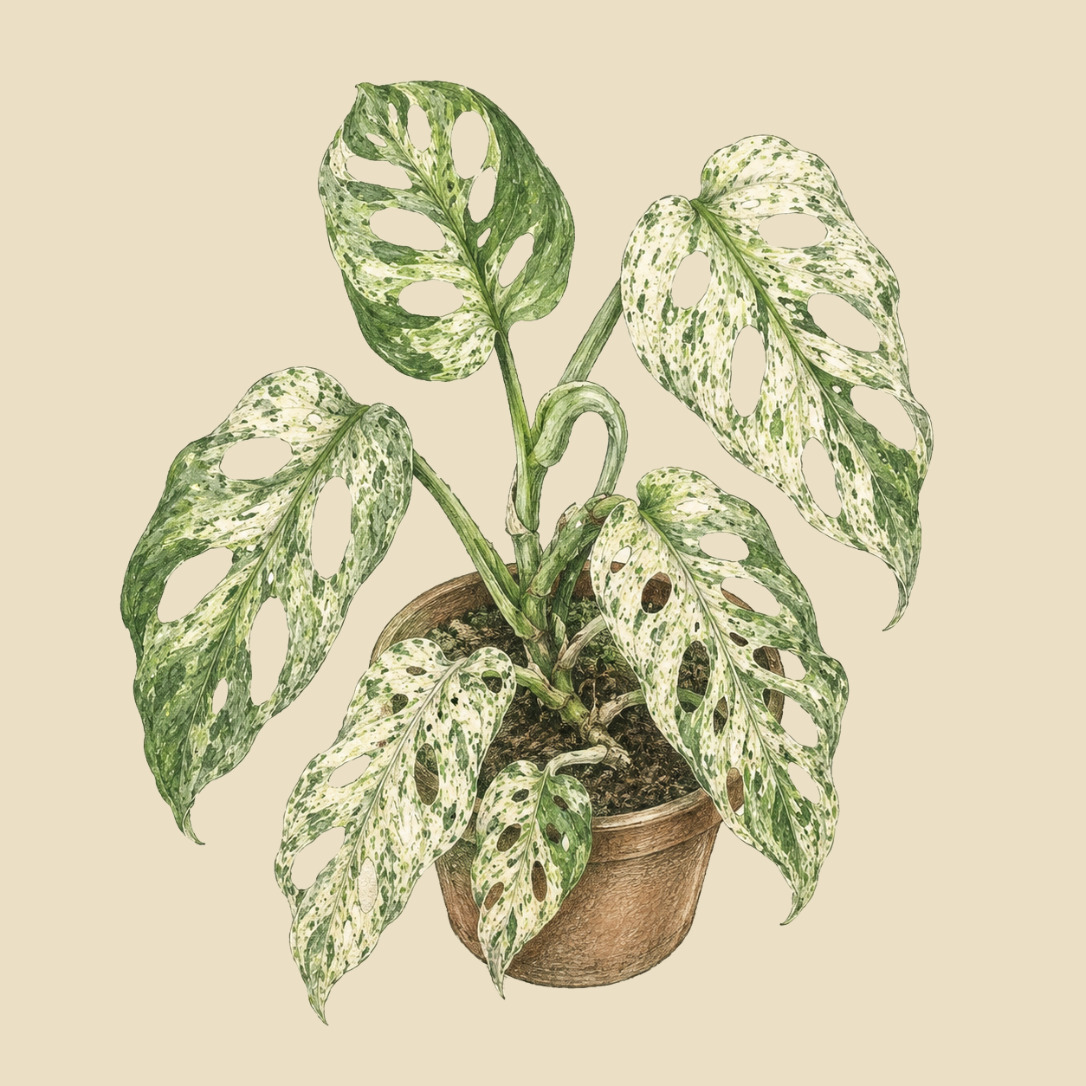
Monstera adansonii 'Frozen Freckles'
Base species native to Tropical America; cultivar is cultivated
Cultivated/trade cultivar of Monstera adansonii. Correct previous LLM wording that wrongly linked Frozen Freckles to Monstera deliciosa. Treat cultivar identity as horticultural/community-verified.
Monstera adansonii 'Frozen Freckles' is a variegated climbing aroid that benefits from bright, indirect light, a chunky well-draining mix, and climbing support. Allow the upper mix to partly dry between waterings and avoid harsh sun on pale variegated leaves.
Aroid mix: 40% orchid bark, 40% coco coir, 20% perlite. Repot every 1–2 years in spring when roots circle the pot or emerge from drainage holes. A slightly snug fit is acceptable, but the plant hates being heavily root-bound. Ensure the pot has drainage holes.
Monthly during growing season (spring–summer)
- Root rot from overwatering or poor drainage; variegation fade in insufficient light; brown leaf tips from low humidity or fluoride in tap water; spider mites and mealybugs in dry conditions.
- Frozen Freckles' is a horticultural/trade cultivar name used for a speckled variegated Monstera adansonii.
- The white flecks are variegated tissue with less chlorophyll, so the plant needs good indirect light but can scorch in direct sun.