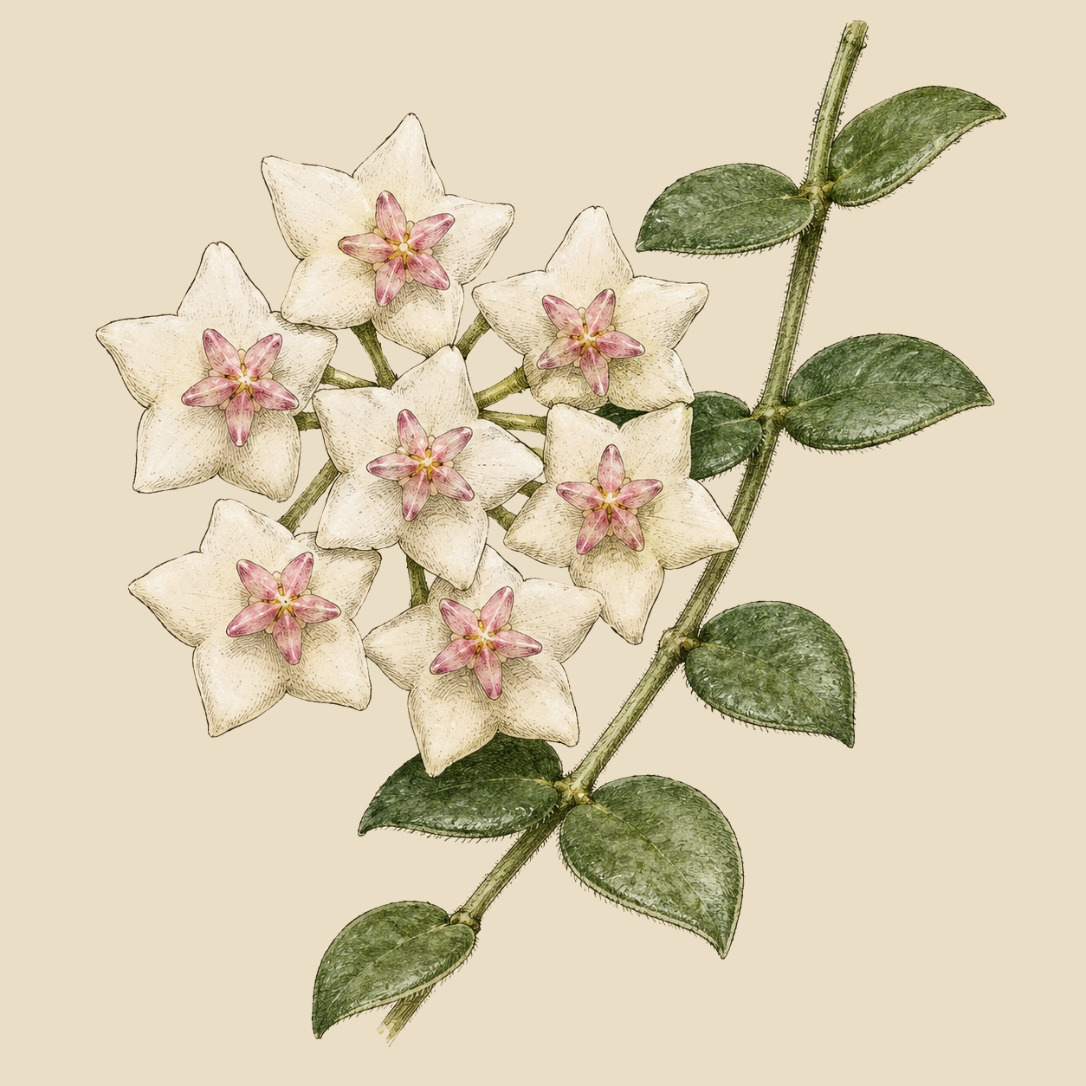
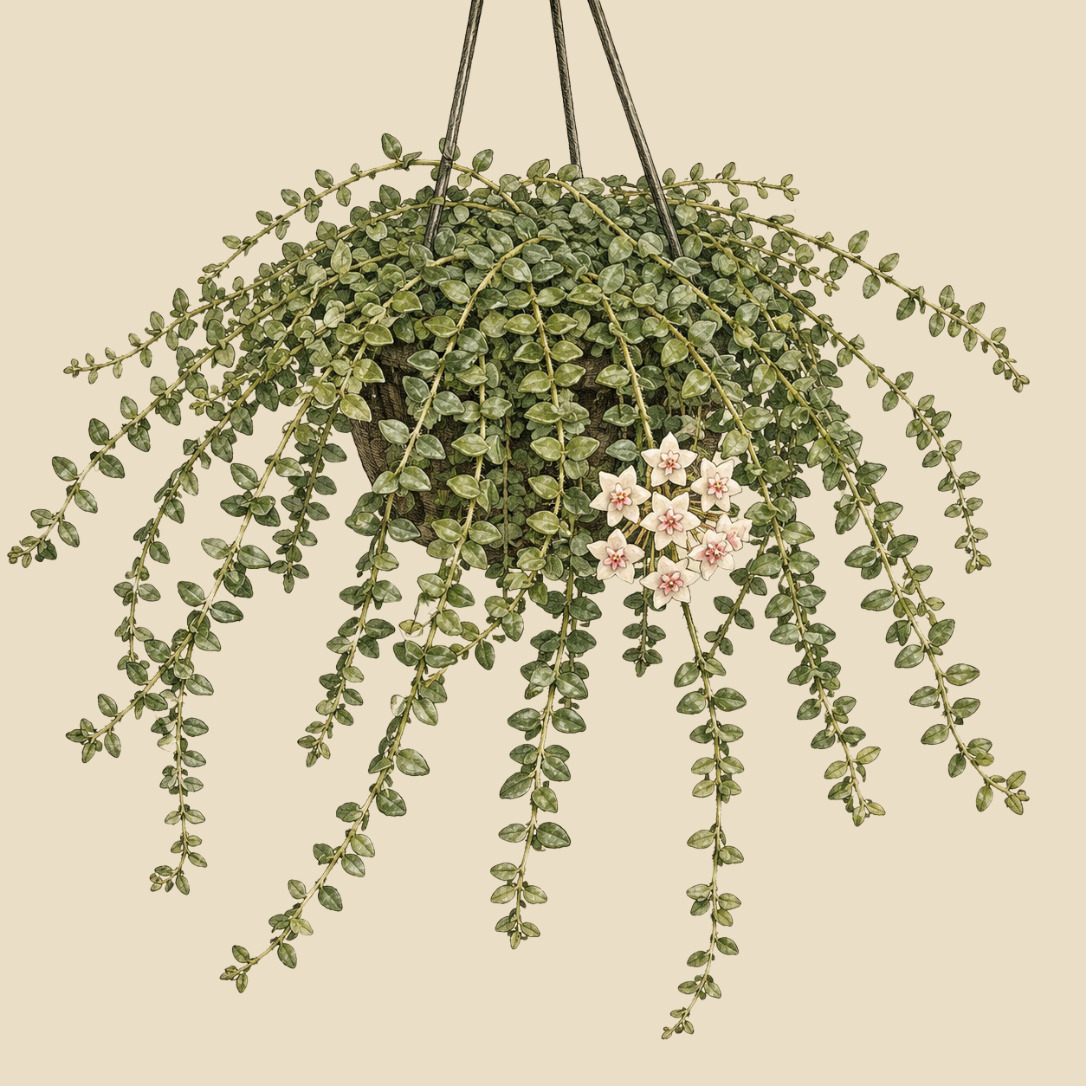
Hoya chinghungensis
China (S. Yunnan) to Indo-China
Small to medium opposite Hoya leaves on a trailing/climbing vine
Slow to moderate trailing/climbing epiphyte; flowers on mature vines and persistent peduncles.
The genus was named by Scottish botanist Robert Brown to honor his friend Thomas Hoy. The specific epithet -chinghungensis comes from Ching-hung (also spelled Jinghong) which is a city in the Yunnan province of China.
Hoya chinghungensis is endemic to Yunnan Province in southwestern China, where it grows as an epiphytic or semi-epiphytic climber in tropical montane cloud forests. It was described in the modern era and remains relatively obscure in botanical literature, with limited wild collection data. The species epithet 'chinghungensis' likely refers to a locality or collector's name within its native range.
Prefers bright, indirect light and well-draining aroid or orchid mix. Allow soil to dry slightly between waterings and avoid waterlogging, which causes root rot. Moderate humidity (50–70%) and consistent warm temperatures support best growth and flowering. Growers often find it to be slightly thirstier than most hoya. Min temp: 50F/10C
Use an aroid or orchid-focused mix: 40% orchid bark, 40% coco coir, 20% perlite or pumice. Hoya chinghungensis prefers slightly snug conditions and does not require frequent repotting. Repot every 2–3 years in spring only if roots circle the pot; the plant flowers more reliably when slightly root-bound.
Monthly during growing season (spring–summer)
- Root rot from overwatering or poor drainage; mealybugs and spider mites in low humidity; reluctance to flower if light or fertility is inadequate; leaf yellowing from cold drafts or inconsistent watering
- Hoya chinghungensis is a relatively rare species in cultivation, prized for its small waxy flowers and compact leaf size
- The genus Hoya is named after Thomas Hoy, an 18th-century botanist and curator at Kew Gardens
- Hoyas produce sweetly scented clusters of star-shaped flowers that secrete nectar, attracting native pollinators in their natural habitat