Plate 004
At a Glance
Light Bright indirect
Water Every 8 days
Humidity medium
Temp. 15–28 °C
Habit Upright
Growth Medium
Care Moderate
Height 90–300 cm
Add to your collection
species Moraceae ◉ Verified
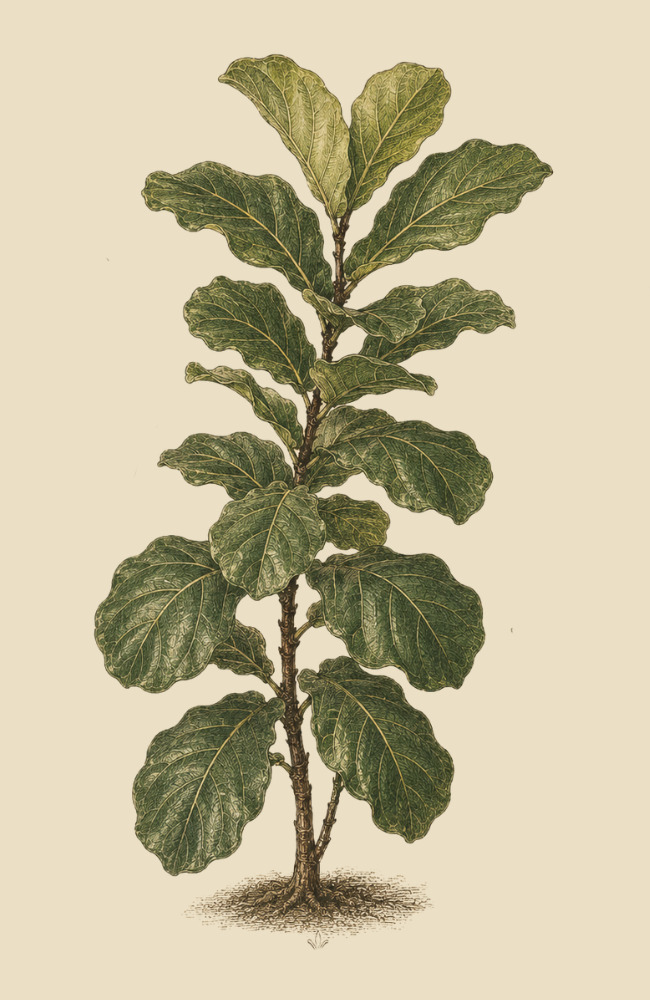
Ficus lyrata
Fiddle Leaf Fig · Lyre-Leaved Fig · Banjo Fig
(FY-kus ly-RAH-tuh)
At a Glance
Light Bright indirect
Water Every 8 days
Humidity medium
Temp. 15–28 °C
Habit Upright
Growth Medium
Care Moderate
Height 90–300 cm
Add to your collection
Origin & Habitat
W. & W. Central Tropical Africa
Botanical Notes
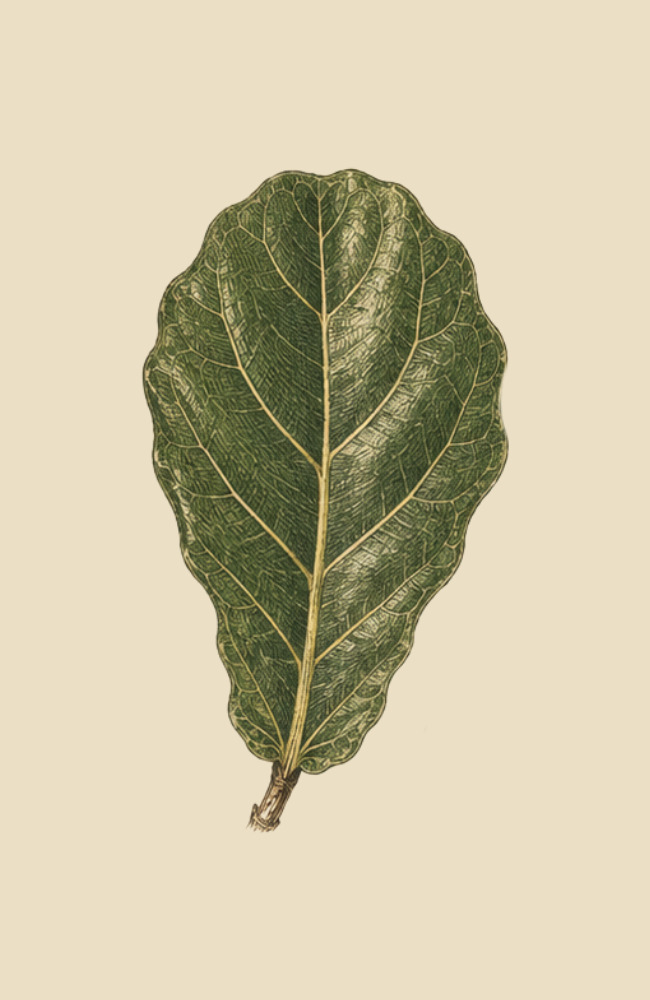
Ficus lyrata was formally described in the mid-19th century and has become a staple of contemporary interior horticulture. The name 'lyrata' refers to the lyre-shaped outline of its leaves. Native to humid, tropical rainforests, it has adapted to indoor cultivation but remains somewhat temperamental, requiring consistent care.
Care Guide
Requires bright, indirect light and well-draining potting soil to thrive. Water when the top 2–3 cm of soil dries out, and avoid overwatering, which causes root rot. Sensitive to drafts and temperature fluctuations; maintain stable, warm conditions and rotate the plant monthly for even growth.
Feeding
Bi-weekly during growing season (spring–summer); monthly or less in fall–winter
Notes & Curiosities
- The distinctive lyre-shaped leaves (lyrata) are the inspiration for its common name and scientific epithet.
- Fiddle Leaf Figs are one of the most popular interior design plants, particularly in modern minimalist spaces.
- In its native West African habitat, the plant produces small figs that are eaten by wildlife, though it rarely fruits indoors.
⚠ Toxicity: toxic to pets, toxic to humans. Sap and leaves contain irritating compounds; ingestion causes mild gastrointestinal upset and skin irritation in pets and humans