Epipremnum pinnatum 'Cebu Blue'
Parent species native Tropical & Subtropical Asia to Pacific
First described by Engler combination based on earlier Linnaean basionym. (1832)
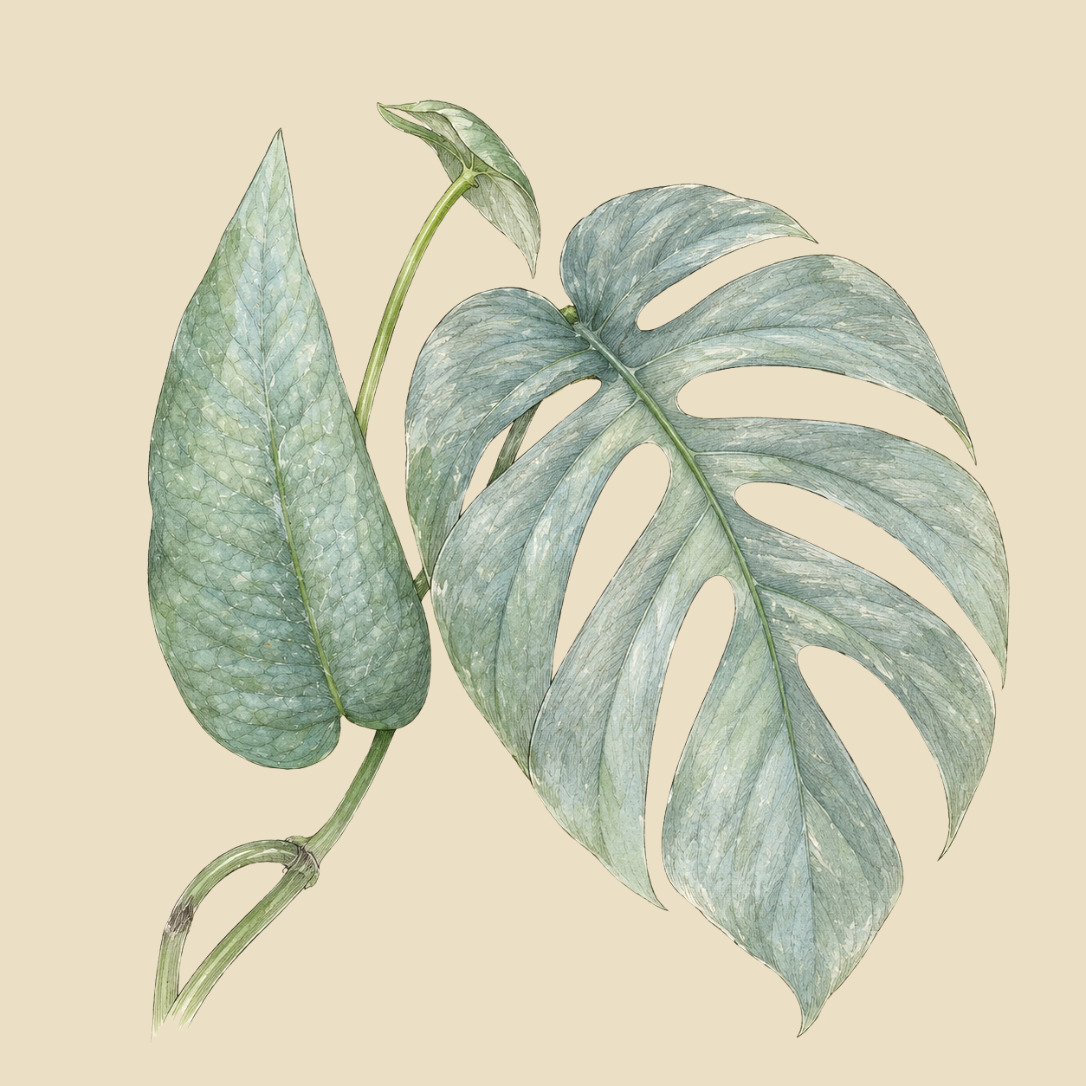
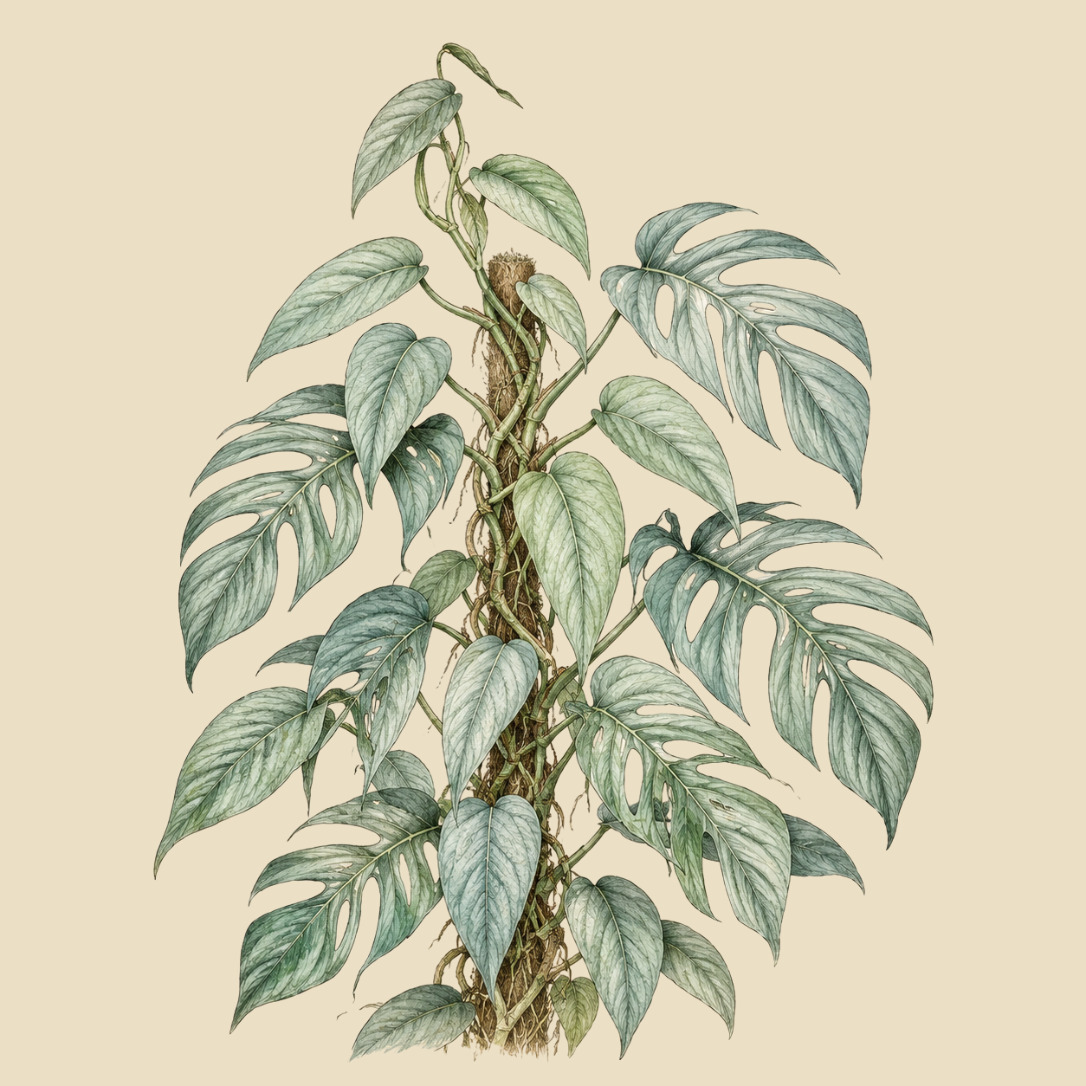
Blue-green, narrow juvenile leaves that can fenestrate when mature and climbing.
Fast climbing/trailing vine; mature foliage becomes larger and may split when allowed to climb.
From Greek roots often interpreted as 'upon a trunk/stem', fitting its climbing habit. Species epithet means 'feathered' or 'pinnate'.
Epipremnum pinnatum was long confused with Pothos (Epipremnum aureum) but is a distinct species with different leaf morphology. The common name 'Cebu Blue' reflects both its island origin and the characteristic blue-grey iridescent sheen on its foliage. It naturally grows as a climbing aroid in tropical Philippine rainforests.
Provide bright, indirect light to develop the characteristic blue-tinged foliage and encourage pinnate leaf formation. Keep soil consistently moist but not waterlogged, and maintain humidity above 60% for optimal growth. Use a moss pole or trellis to support climbing and promote the development of larger, more deeply lobed leaves.
Monthly during growing season (spring–summer)
- Slow growth in low light; yellowing leaves from overwatering or poor drainage; brown leaf tips from low humidity or fluoride in tap water; susceptible to spider mites and mealybugs in dry conditions.
- The 'Cebu Blue' gets its name from Cebu Island in the Philippines, where it originates
- Unlike juvenile Pothos, this species naturally develops deeply pinnate (feathered) leaves as it matures when given proper support
- The blue-silver sheen on the leaves becomes more pronounced in brighter light conditions