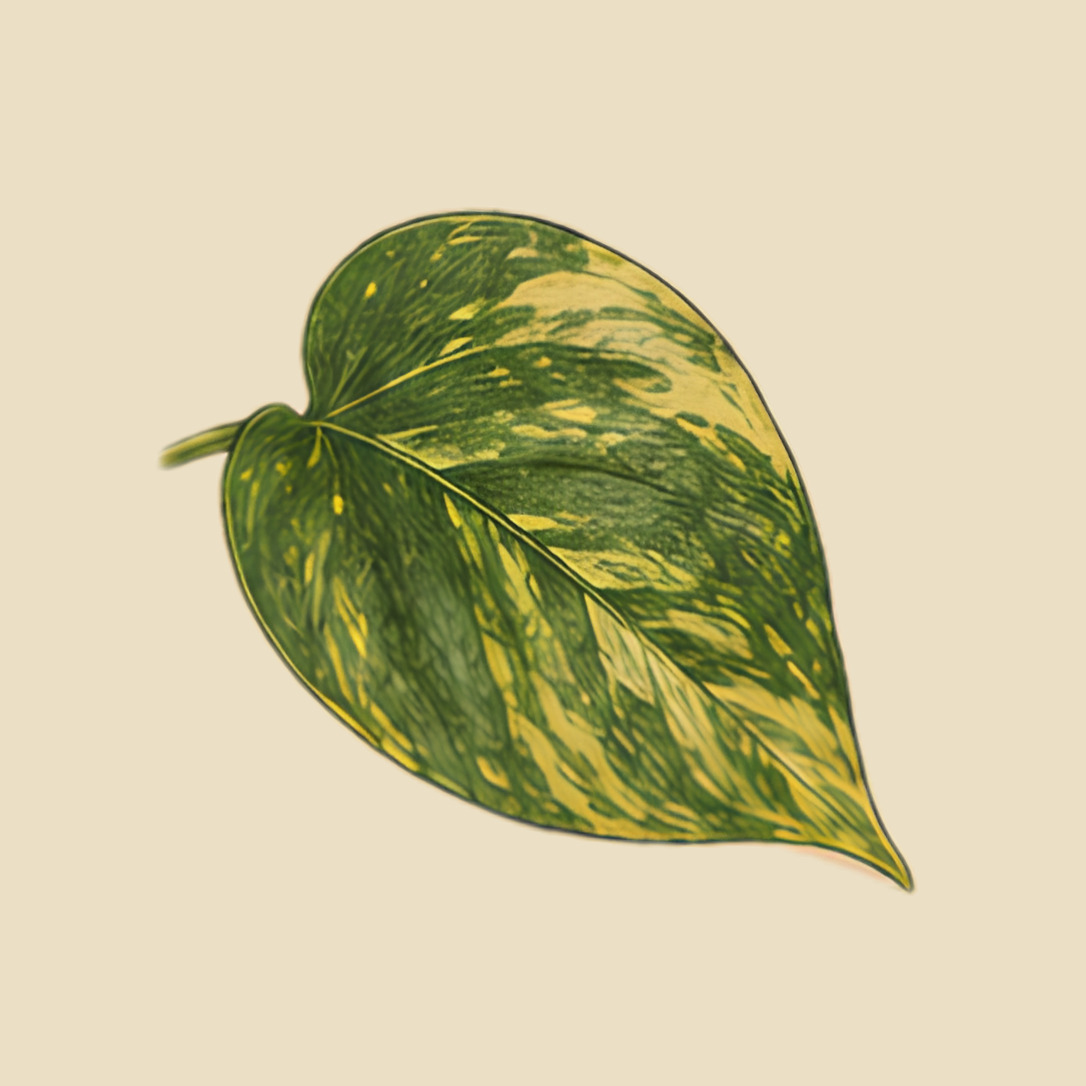

Epipremnum aureum
Society Islands (Mo'orea)
First described by G.S. Bunting, based on earlier basionym by Linden & André. (1964)
Heart-shaped green leaves with yellow/gold variegation; mature climbing plants may develop larger split leaves.
Fast climbing/trailing vine; mature foliage becomes larger and may split when allowed to climb.
From Greek roots often interpreted as 'upon a trunk/stem', fitting its climbing habit. Species epithet means 'golden'.
Originally described from French Polynesia, Epipremnum aureum was formerly classified as Scindapsus aureus. The genus name derives from Greek 'epi' (upon) and 'premnon' (trunk), referring to its epiphytic growth habit. The species name 'aureum' means 'golden,' referencing the golden variegation on leaves.
This Epipremnum tolerates low light but thrives in bright, indirect conditions. Water when the top 1–2 inches of soil are dry; avoid waterlogging. Pinch back regularly to encourage bushier growth and prevent leggy vines.
Monthly during growing season (spring–summer)
- Root rot from overwatering; yellowing leaves from poor drainage; brown tips from low humidity or tap water chlorine; slow growth in low light.
- Pothos can grow indefinitely and is nearly impossible to kill, making it ideal for beginners.
- In tropical regions, Pothos can climb trees as a hemi-epiphyte, reaching 40+ feet in the wild.
- Despite common naming confusion, Epipremnum aureum is distinct from Philodendron and has uniquely shaped leaves that become more fenestrated as the plant matures in some conditions.