Ceropegia linearis subsp. debilis
Taxonomy varies by source; POWO treats Ceropegia debilis separately with range southern Malawi to northern Zimbabwe.
First described by N.E. Brown; combination cited by H. Huber in some references. (1895)
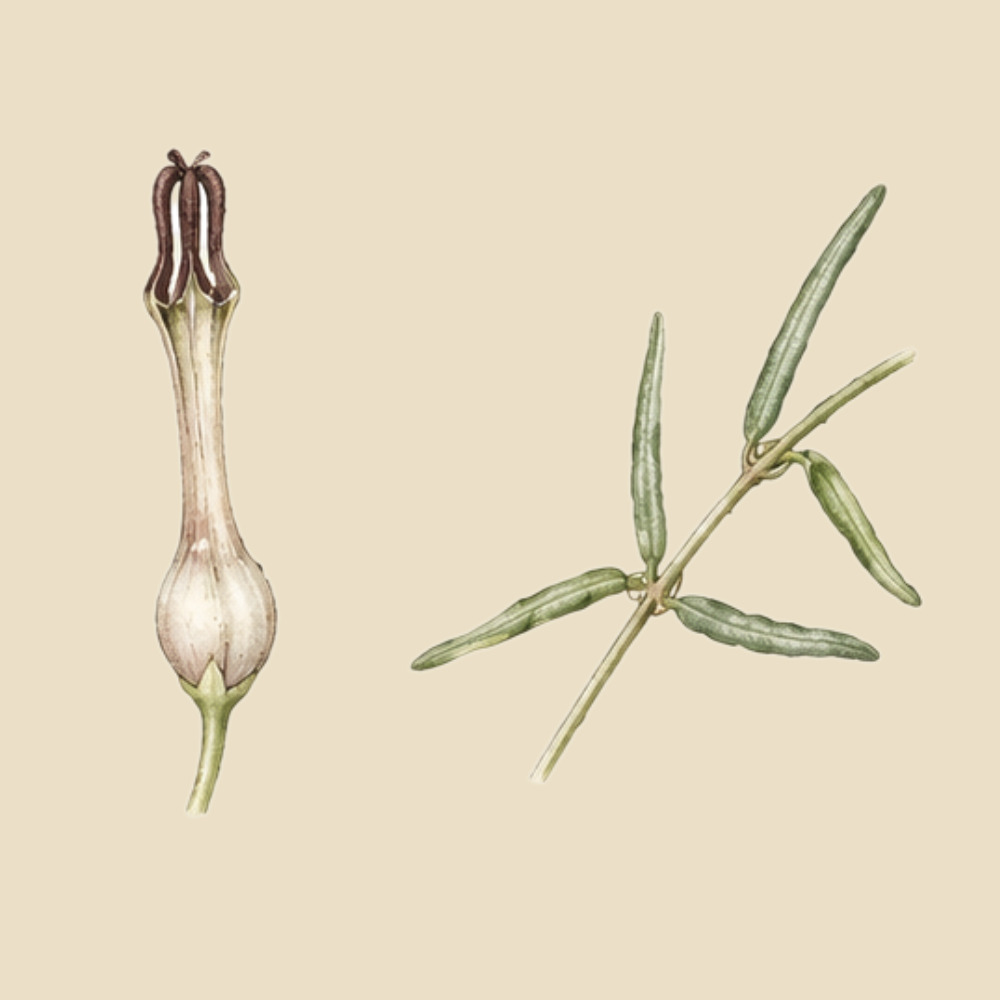
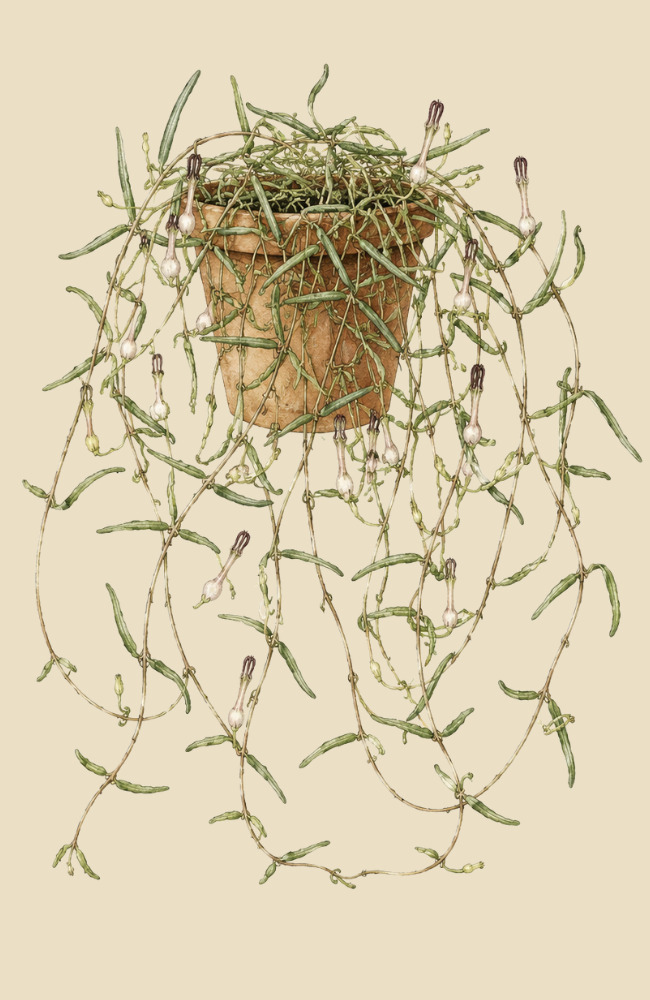
Very narrow opposite leaves on thin wiry vines, giving a needle-like appearance.
Fine trailing stems arise from small tubers; can trail from a hanging pot or climb lightly through supports.
Ceropegia roughly refers to a wax-fountain/candelabrum-like flower form; debilis means weak or slender.
Taxonomy conflict: POWO currently accepts Ceropegia debilis as a species, while ITIS treats it as Ceropegia linearis subsp. debilis. Kept under the horticultural app name String of Needles, but marked unverified/community pending chosen taxonomy rule.
Give very bright indirect light and let the mix dry most of the way between waterings. Treat more like a succulent vine than a thirsty tropical.
Use a small pot and a very free-draining succulent/aroid mix. Repot gently because the vines and small tubers can snap.
Monthly at weak strength during active growth.
- Rot from heavy wet soil; shrivelling from prolonged drought; weak sparse growth in low light; mealybugs around nodes or tubers.
- Ceropegia flowers often look like tiny lantern traps designed to temporarily hold small pollinating flies.