Aspidistra elatior
S. Japan
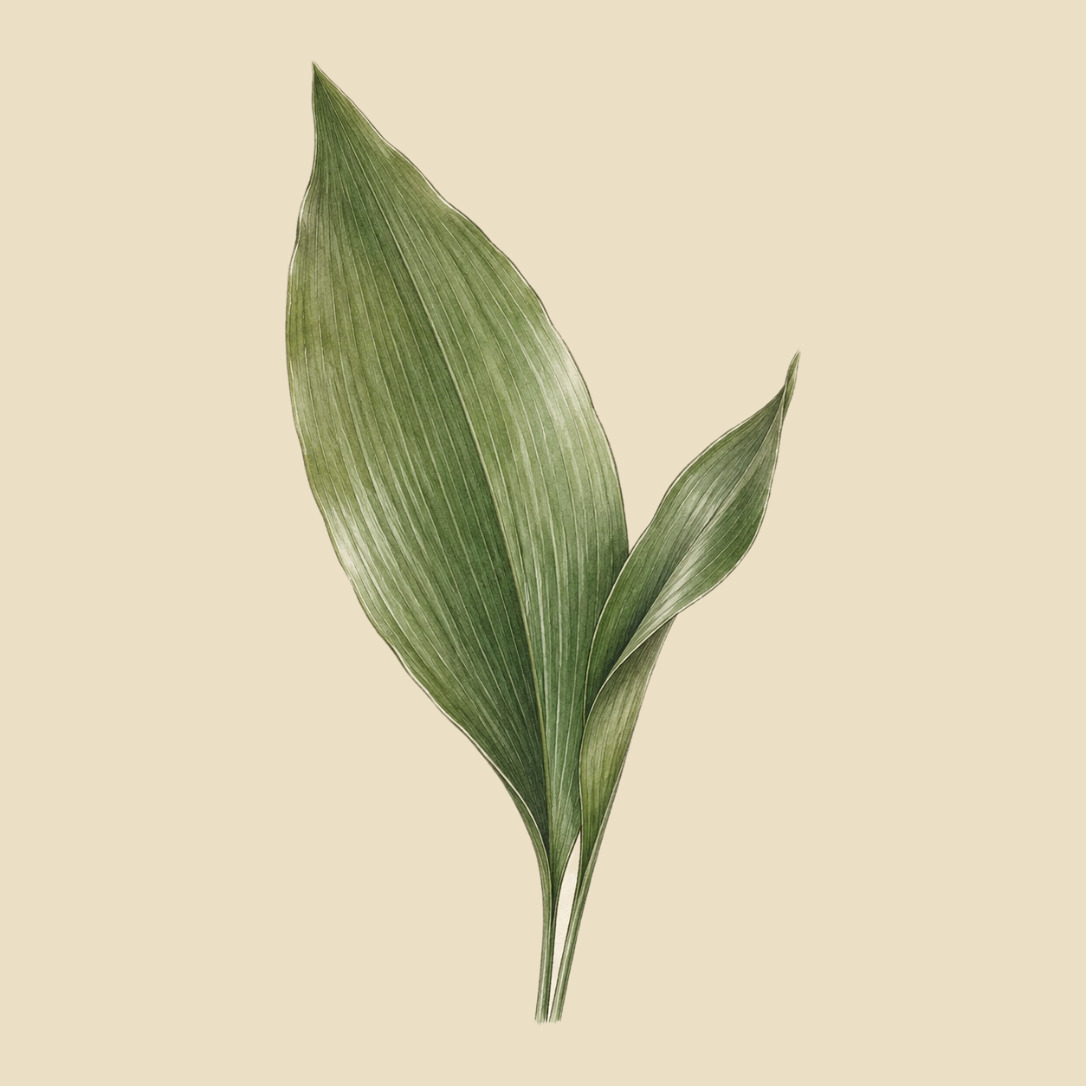
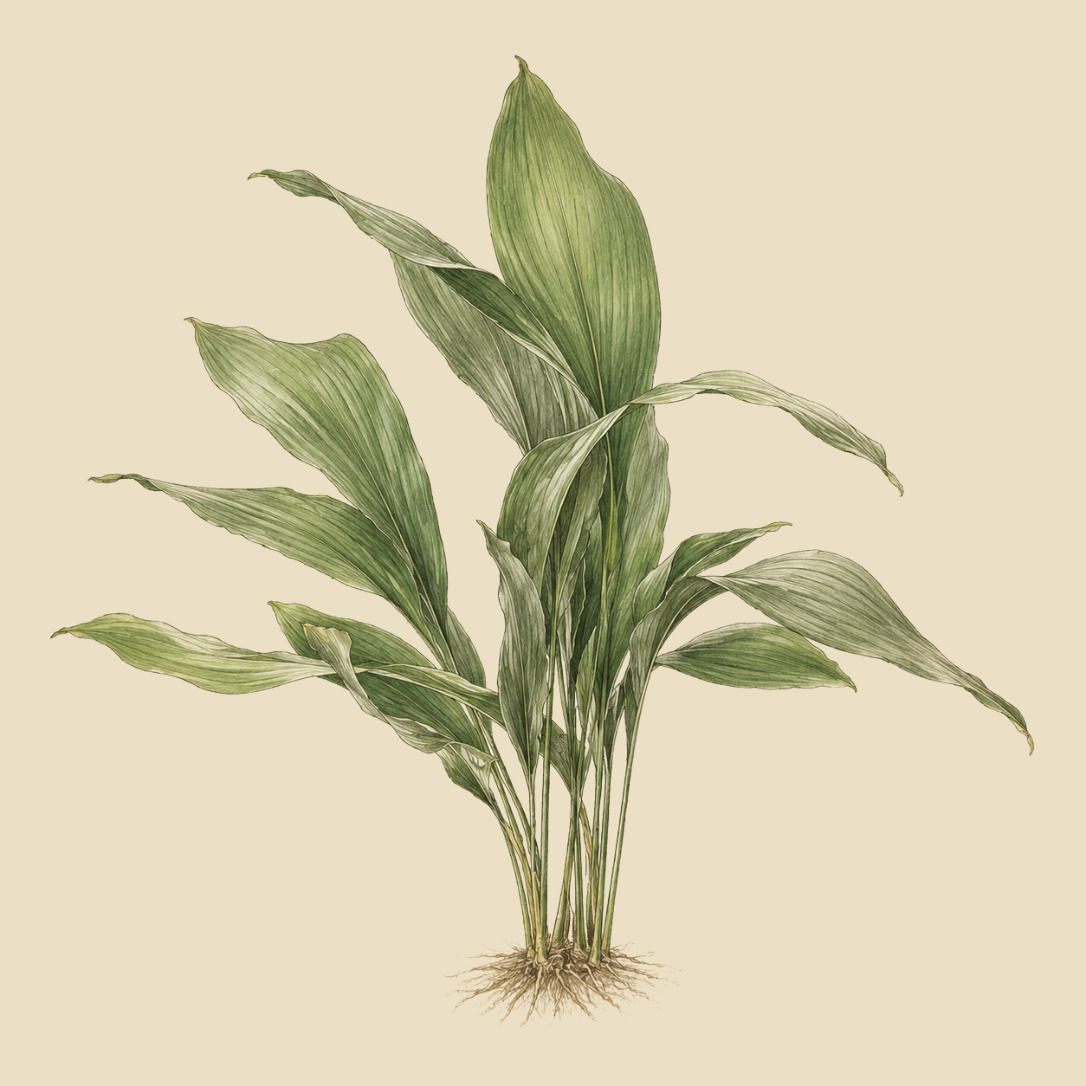
Long upright dark green strap leaves emerging from rhizomes.
Slow rhizomatous clumper; produces new leaves gradually and tolerates lower light.
From Greek aspidion ('small shield'), often linked to the shape of the stigma. Species epithet means 'taller'.
Aspidistra elatior is native to China and Japan and was introduced to Europe via the Kew Gardens in the 19th century. The genus name comes from the Greek 'aspis' (shield) and 'astra' (star), referring to the shape of the stigma. 'Elatior' means 'taller' or 'more elevated.' It became an icon of Victorian and Edwardian interior design, symbolizing endurance and the ability to thrive in even the harshest indoor conditions.
Aspidistra is famously tolerant of neglect and low light, thriving in conditions that would kill most houseplants. Water moderately when soil surface dries; it prefers to dry out slightly between waterings. Avoid overwatering, which is the primary threat to this hardy plant.
Standard houseplant potting mix (equal parts peat, perlite, and coco coir) works well. Aspidistra is slow-growing and tolerates being somewhat root-bound; repot every 2–3 years in spring only if roots are circling densely. Ensure pot has drainage holes.
Monthly during growing season (spring–summer)
- Overwatering and poor drainage cause root rot; spider mites and scale insects in very dry conditions; leaf spotting from excessive moisture or cold drafts.
- Named 'Cast Iron Plant' for its ability to survive in poorly lit Victorian parlors, basements, and neglected corners — it thrives where other plants fail.
- The tiny, maroon flowers that form at the base are rarely seen indoors but are pollinated by ants in nature.
- Extremely popular in 1800s Britain as a low-maintenance houseplant for public buildings, offices, and rooms with no natural light.