
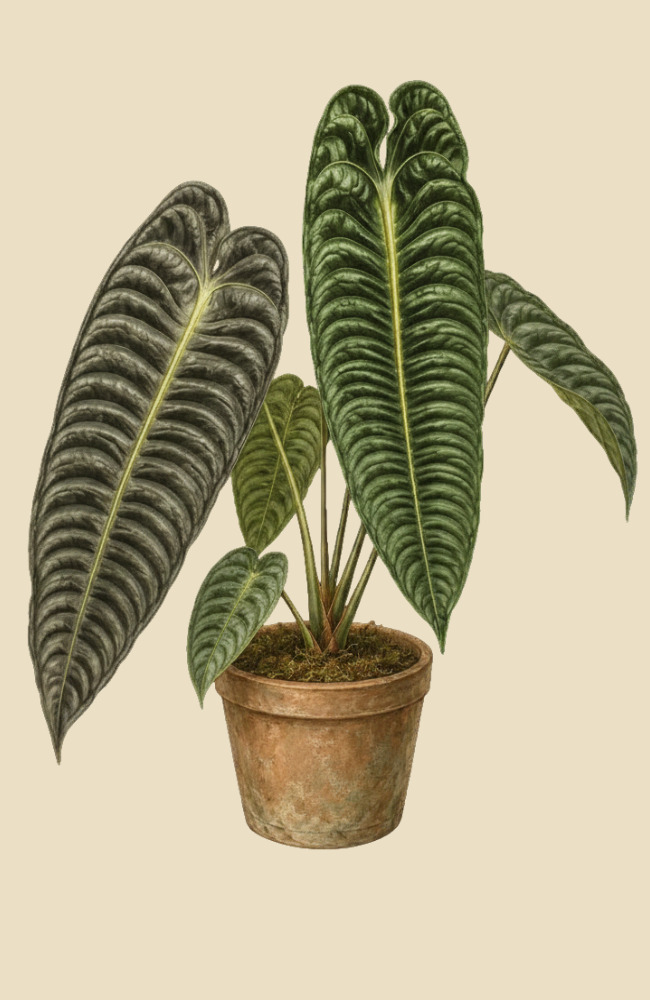
Anthurium veitchii
Colombia (Chocó, Antioquia)
Named after John Gould Veitch, a renowned 19th-century plant collector and horticulturist. Described scientifically in 1878, The species is highly valued in the houseplant trade for its dramatic foliage and remains a collector's favorite despite its higher care requirements compared to common Anthurium species.
Provide bright, indirect light and consistent moisture without waterlogging. High humidity (60–80%) is essential; mist regularly or use a humidifier. Use a chunky, well-draining aroid mix and allow the top inch of soil to dry between waterings.
Aroid mix: 40% orchid bark, 40% coco coir, 20% perlite. Add a moss pole or trellis to support its climbing habit. Repot every 18–24 months in spring when roots circle the pot. Slightly snug root systems promote more fenestration.
Monthly during growing season (spring–summer)
- Root rot from overwatering or poor drainage; spider mites and mealybugs in low humidity; yellow leaves from inconsistent watering or low light; brown leaf tips from low humidity or fluoride in tap water.
- Anthurium veitchii is famous for producing deeply lobed, corrugated leaves that can reach 60+ cm long on mature plants, earning it the 'King' title among Anthuriums.
- The species is an epiphytic hemiepiphyte in its native rainforest habitat, naturally climbing trees and aerial rooting.
- Fenestration (leaf holes or splits) develops as the plant matures in adequate light, a hallmark of many aroid climbers.