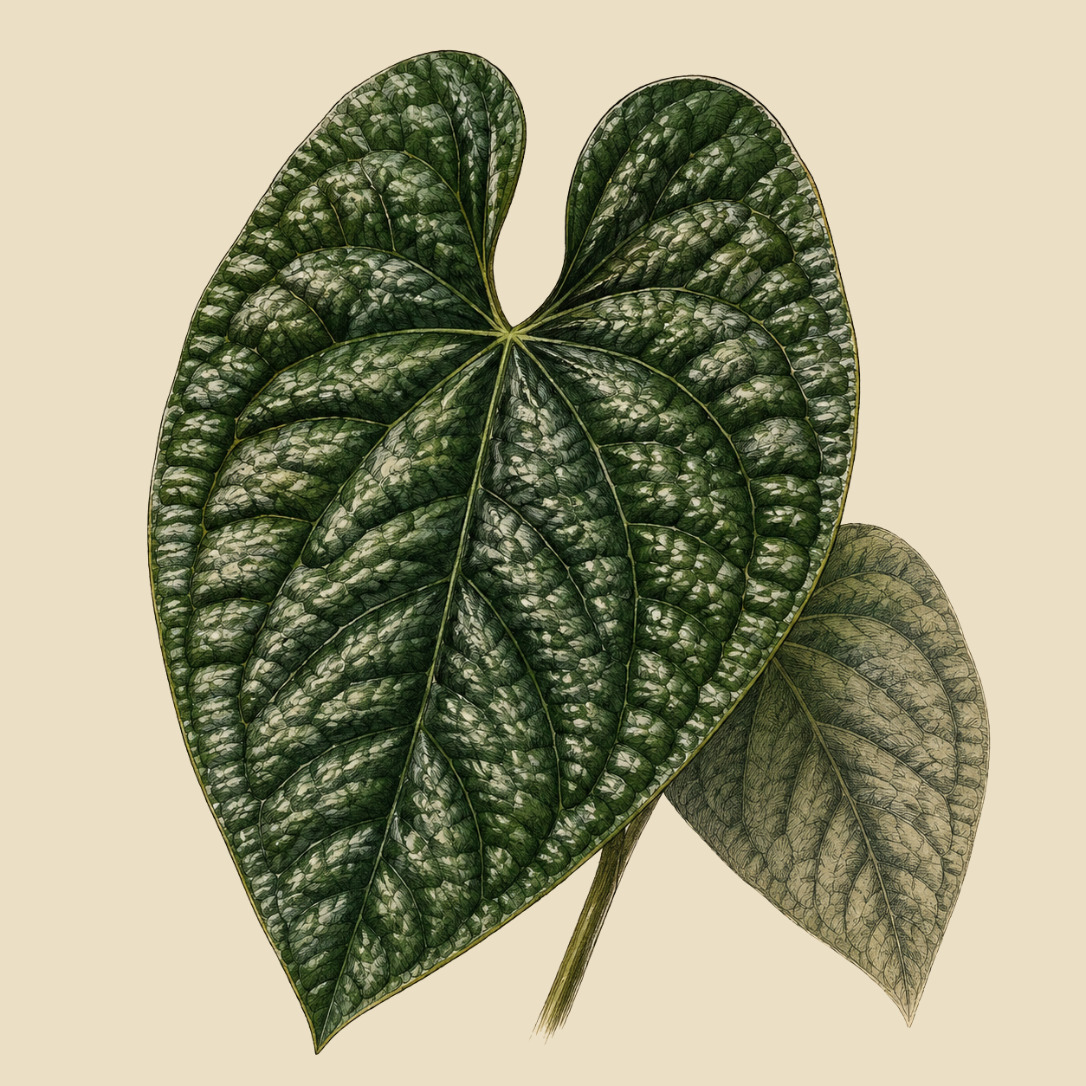
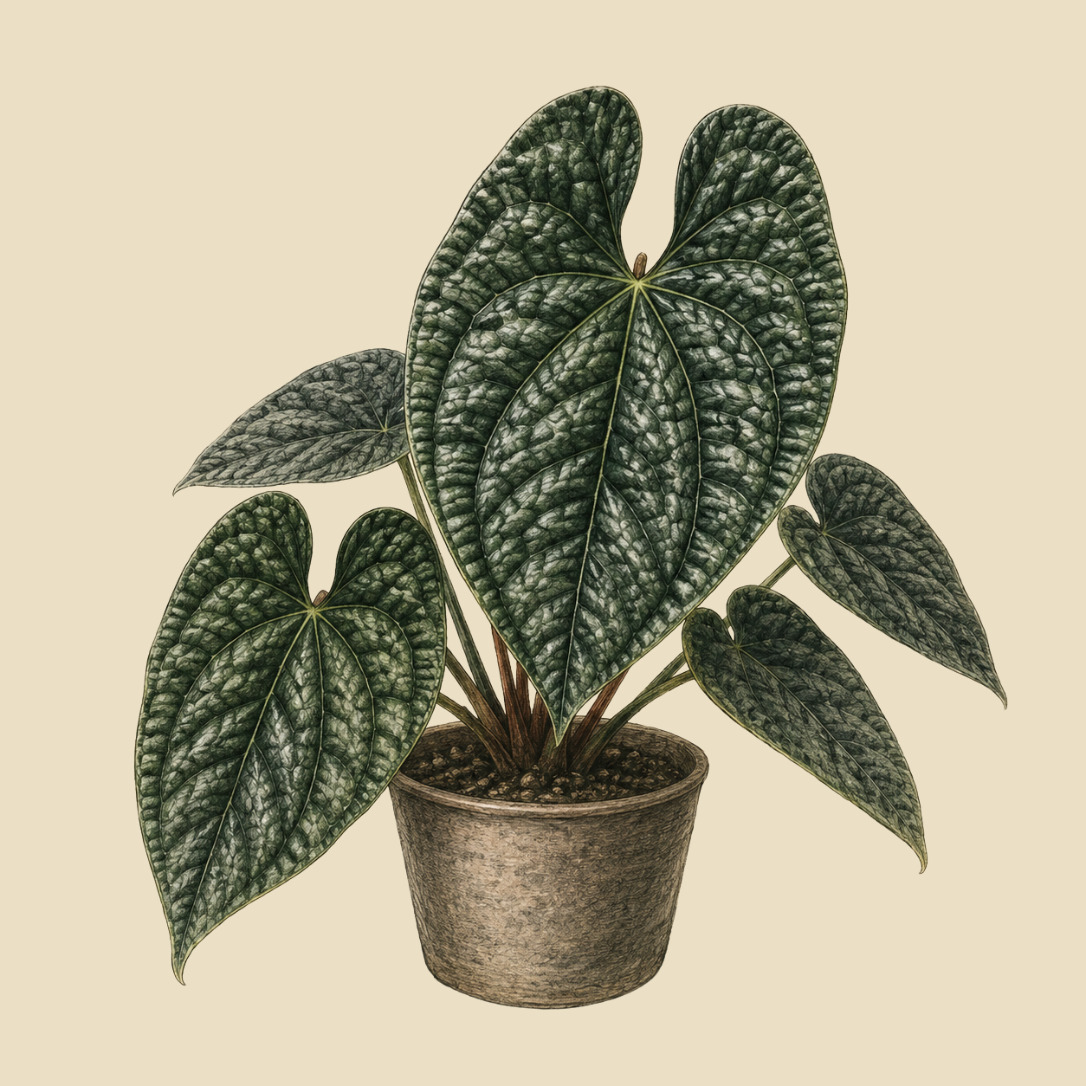
Anthurium luxurians
Colombia
First described by Croat & R.N.Cirino. (2005)
Thick, quilted, bullate heart-shaped leaves that emerge bronzy and mature deep green.
Usually grows as an epiphyte or terrestrial aroid; prefers airy mix, steady moisture, and high humidity.
From Greek anthos ('flower') and oura ('tail'), referring to the tail-like spadix. Species epithet means 'luxuriant' or 'abundant'.
Anthurium luxurians was described and named for its luxuriant, impressive foliage—'luxurians' derives from the Latin 'luxuriosus,' meaning luxuriant or abundant. Native to tropical rainforests of Central America and Panama, it grows as a terrestrial or semi-epiphytic plant in warm, humid understory conditions. The species remains relatively uncommon in cultivation compared to cultivars like Anthurium clarinervium or warocqueanum.
Anthurium luxurians thrives in bright, indirect light and prefers consistently moist (not waterlogged) soil during the growing season. Maintain high humidity (60–80%) and warm temperatures; it dislikes cold drafts and sudden temperature fluctuations. Use a well-draining aroid mix and avoid direct sun, which can scorch leaves.
Use an aroid mix: 40% orchid bark, 40% coco coir, 20% perlite. Anthurium luxurians prefers a snug pot with good drainage—repot every 18–24 months in spring when roots begin to circle the pot. Slightly root-bound specimens may flower more readily than those in overly large containers.
Monthly during growing season (spring–summer)
- Susceptible to root rot if overwatered or kept in poorly draining soil; spider mites and mealybugs in low humidity; leaf browning or yellowing from low humidity or hard water; brown leaf tips from fluoride or chlorine in tap water.
- Anthurium luxurians is prized for its large, deeply lobed, heart-shaped leaves that can develop dramatic fenestration (leaf holes) as the plant matures, resembling a Monstera in miniature form.
- The genus Anthurium contains over 1,000 species, making it one of the largest genera in the Araceae family and second only to Philodendron in diversity.
- Unlike many Anthuriums, A. luxurians is primarily a foliage plant rather than a prolific flower producer, though mature specimens may produce modest pink or cream-colored spathes.