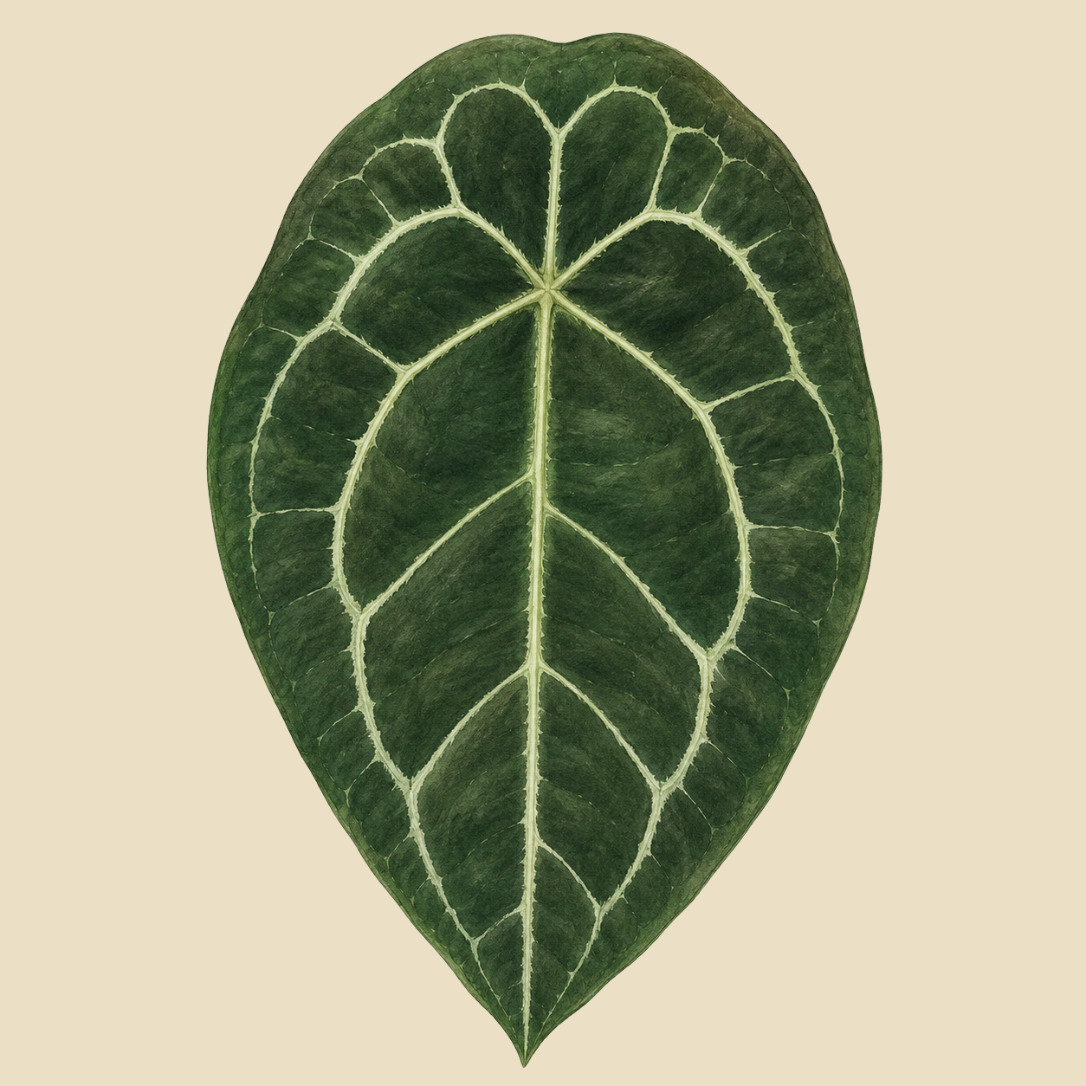
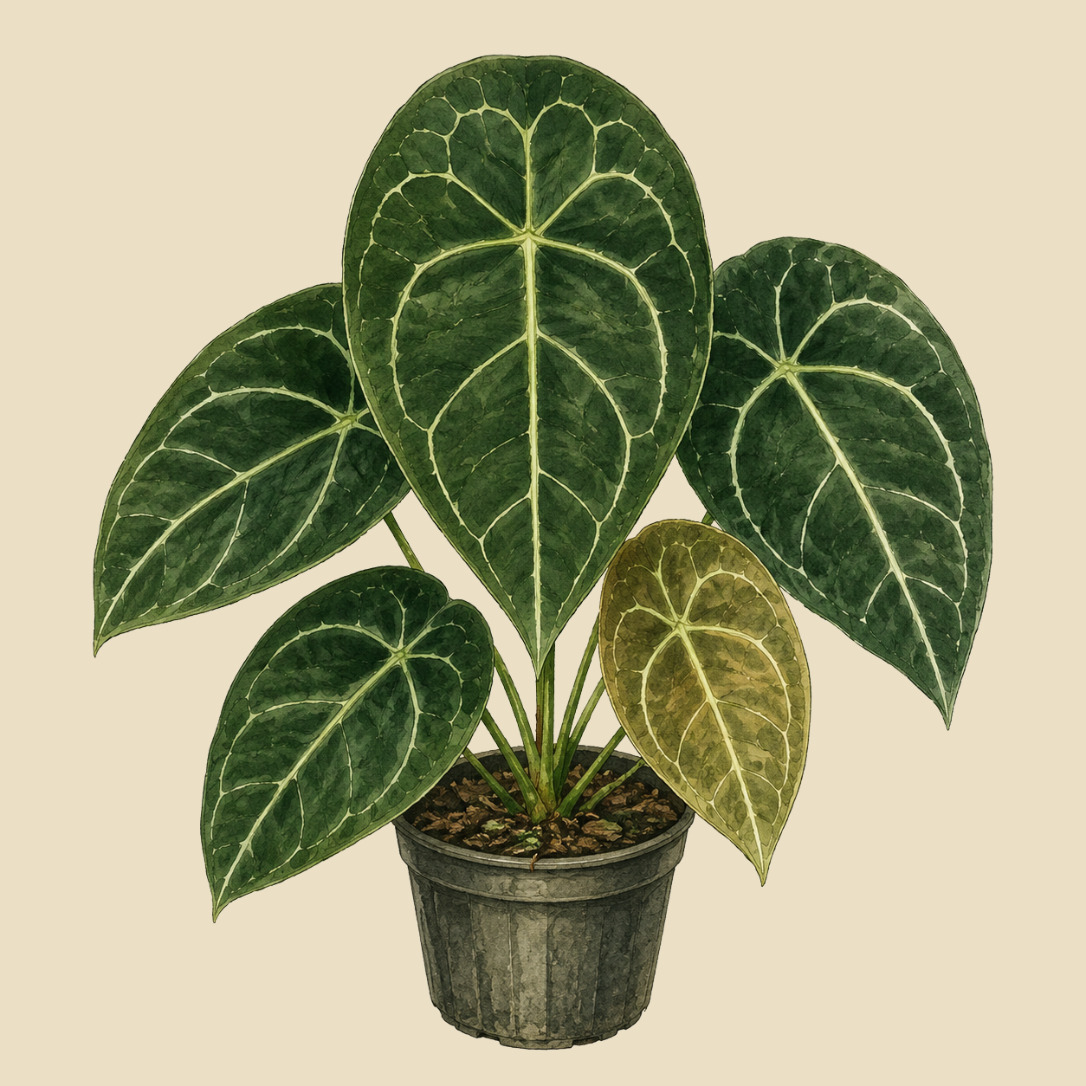
Anthurium forgetii
Colombia
First described by English botanist Nathaniel Edward Brown formally described and published the species in 1906, naming it in Forget's honor..
Celebrated for its distinct, perfectly rounded, velvety leaves. Unlike most Anthurium species, its leaves completely lack a "sinus" (the V-shaped notch at the top), giving the foliage a continuous, shield-like oval outline
A. forgetii naturally grows in a tight, compact rosette pattern.
From the Greek words anthos (flower) and oura (tail). "Flower-tail." This refers to the plant's characteristic spike-like inflorescence (the spadix), which resembles a tail. The specific epithet forgetii honors Monsieur Louis Forget, a renowned tropical plant explorer and collector.
Anthurium forgetii was named after its discovery history in Colombia, where it was found as an epiphytic species in humid tropical forests. The species epithet reflects the plant's initial obscurity in cultivation before gaining popularity in the houseplant trade. It belongs to the Anthurium section characterized by epiphytic climbers with heterophyllous (variable) foliage.
Anthurium forgettii is an epiphytic climber in the wild, thriving on tree bark and moss in rainforests; it needs an airy, well-draining substrate and a moss pole or support to climb. Provide bright indirect light (5,000–20,000 lux), consistent moisture without waterlogging, and high humidity (60–80%) to encourage aerial root development and healthy foliage. Water when the top 1–2 cm of substrate is dry, and ensure good air circulation to prevent root rot and fungal issues.
Epiphytic aroid mix: 50% orchid bark, 30% coco coir, 20% perlite. Forgettii prefers a chunky, loose substrate that mimics tree bark. Use a pot with drainage holes and repot every 18–24 months in spring when roots begin to circle the pot. Slightly snug is acceptable; avoid heavy root-binding but do not overpot.
Monthly during growing season (spring–summer)
- Prone to root rot if substrate is too dense or waterlogged; spider mites and mealybugs in low humidity; brown leaf tips from hard water or mineral buildup; slow growth in insufficient light.
- Anthurium forgettii produces deeply lobed or pinnate juvenile leaves that transform into larger, more deeply dissected adult foliage as the plant matures—a dramatic shift in leaf morphology that can surprise new growers.
- The plant naturally climbs trees in Colombian and Ecuadorian rainforests using aerial roots that can attach to moss, lichen, and bark, making a moss pole or cork bark support essential for mature specimens.
- Despite its modest size compared to giant aroids, Anthurium forgettii is prized by collectors for its unique leaf texture and elegant growth form.