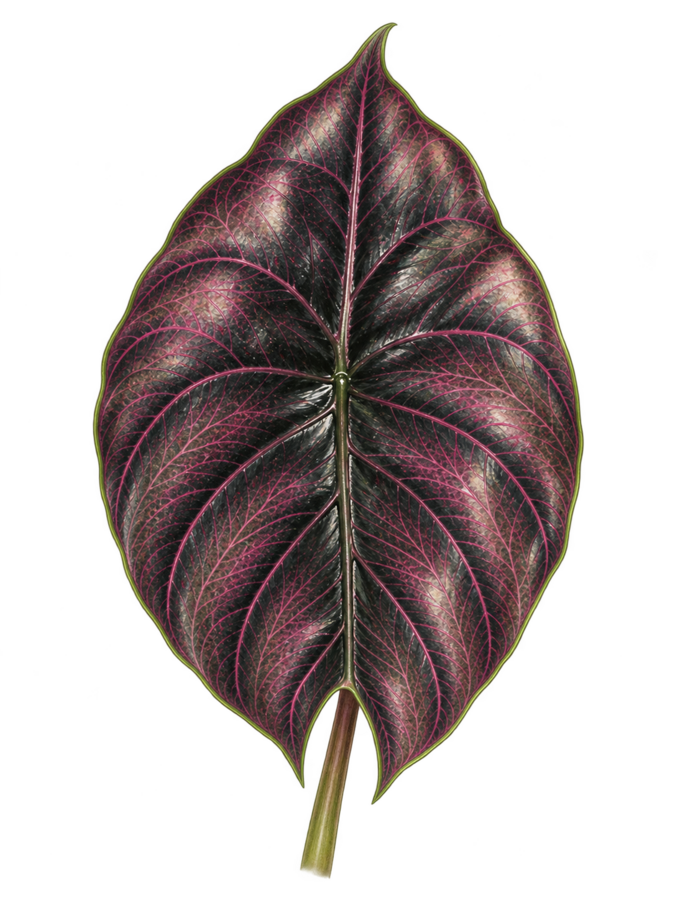
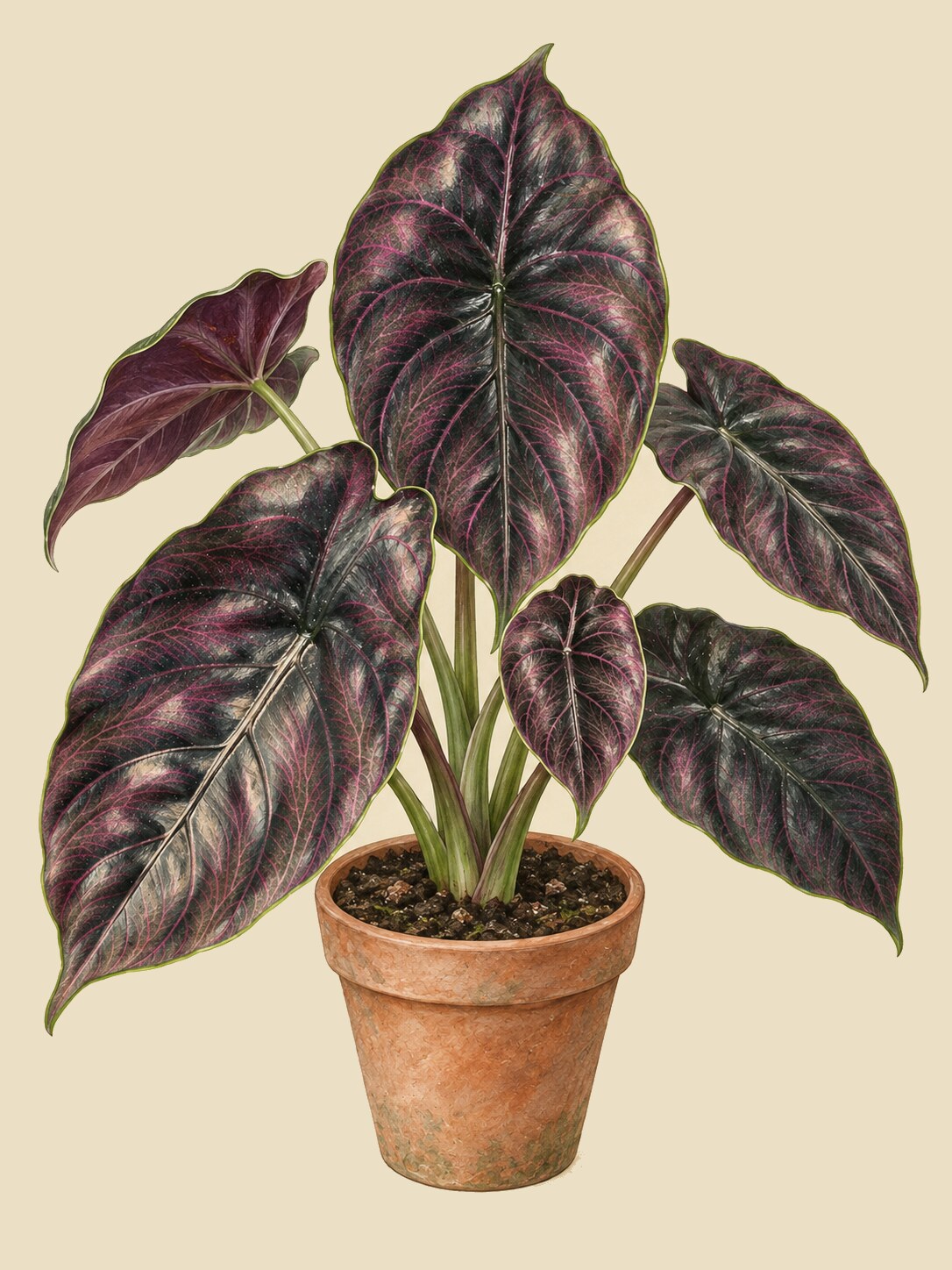
Alocasia azlanii
Borneo (Brunei)
Alocasia azlanii was formally described in the early 2000s and remains relatively uncommon in cultivation. It is endemic to Borneo and represents a relatively recent introduction to the houseplant trade. The genus Alocasia comprises roughly 80–120 species of rheophytic and terrestrial aroids, mostly from Southeast Asia and Australia; A. azlanii is prized among collectors for its unusual lobed foliage and compact growth habit.
Alocasia azlanii is a terrestrial aroid from Southeast Asian rainforests; it prefers bright indirect light, high humidity (60–80%), and consistently moist (not soggy) well-draining aroid mix. Keep temperatures stable between 18–28 °C and avoid cold drafts or sudden temperature swings, which commonly trigger leaf drop. Water when the top 1–2 cm of soil dries, but ensure the pot has excellent drainage to prevent root rot — overwatering is the most common killer.
Aroid mix: 40% orchid bark, 40% coco coir, 20% perlite. Alocasia azlanii dislikes being rootbound but also hates sitting in moisture; repot every 12–18 months in spring when new growth appears. Use a pot only slightly larger than the current one (1–2 cm wider) to minimize excess moisture around the roots.
Monthly during growing season (spring–summer)
- Prone to root rot if overwatered or in poorly draining soil; spider mites and mealybugs in low humidity; leaf yellowing from cold exposure or inconsistent watering; brown leaf edges from low humidity or fluoride in tap water.
- Alocasia azlanii is named after Azlan Shah, the former Sultan of Perak, Malaysia, honouring its Bornean origin.
- The plant's velvety, deeply lobed leaves are an adaptation to low-light tropical understory conditions, maximizing light absorption.
- Alocasia species are fast-growing in humid, warm conditions and can develop new leaves every 1–2 weeks during peak growing season.