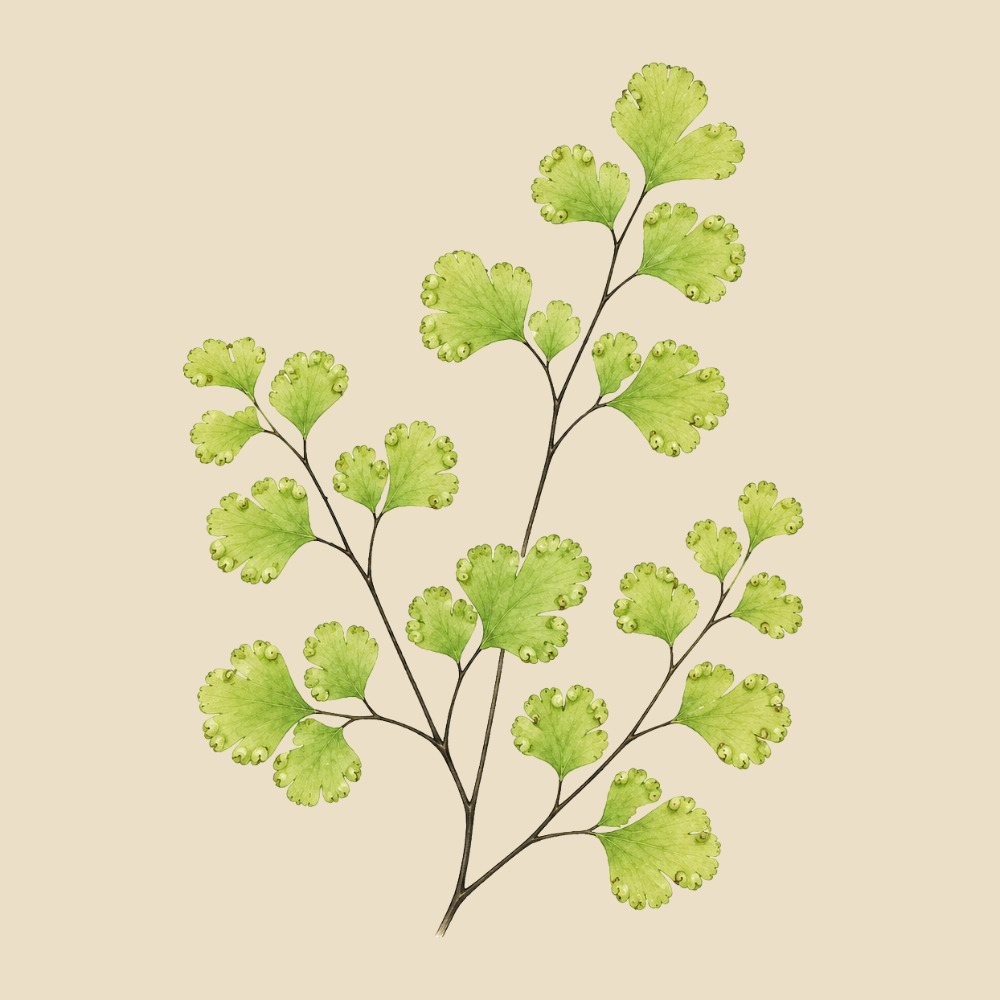
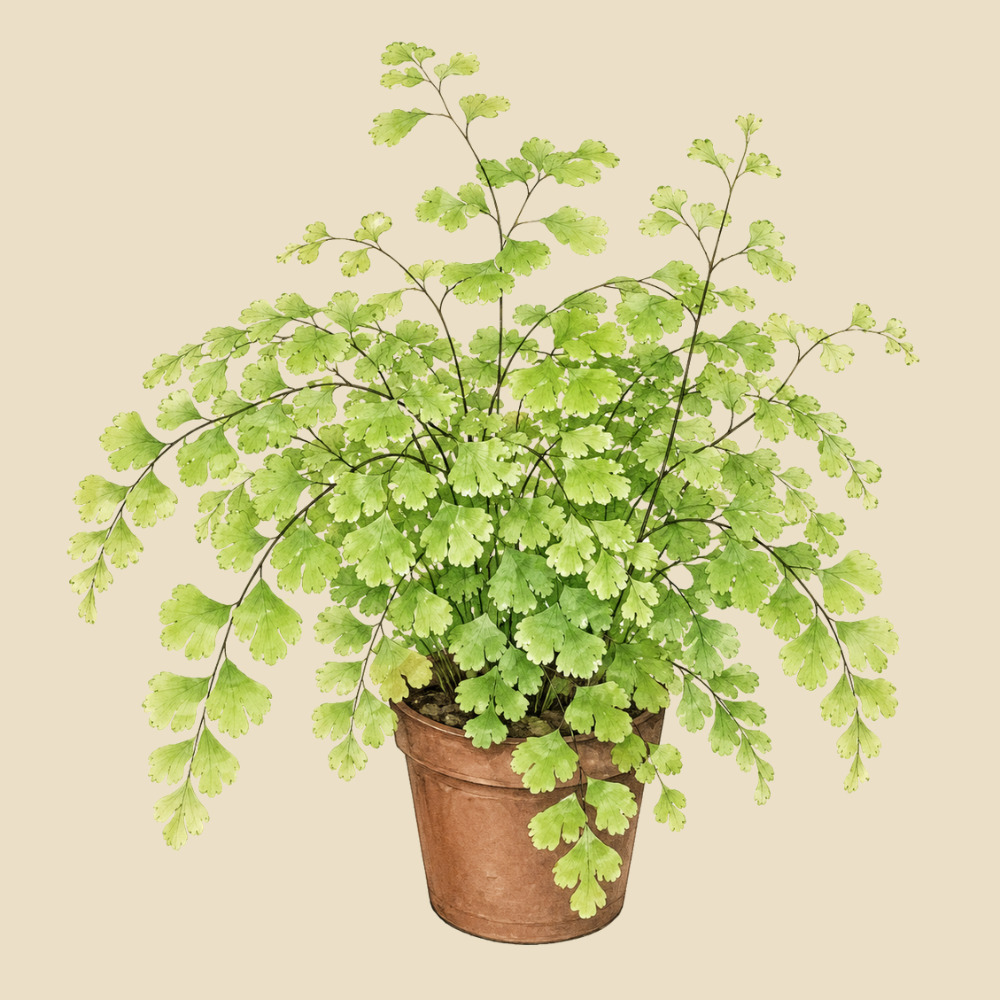
Adiantum raddianum
Mexico to Tropical America
Adiantum raddianum was first described from Brazil and is one of the most widely cultivated tropical maidenhair ferns. The genus Adiantum derives from the Greek 'adiantos' meaning 'unwetted,' referring to the fronds' water-repellent coating that causes water droplets to bead up. Raddianum honours Italian botanist and naturalist Giuseppe Raddi, who collected extensively in Brazil.
Keep soil consistently moist but not waterlogged; maidenhair ferns are sensitive to both drought and poor drainage. Maintain high humidity (60–80%) by misting regularly or placing on a pebble tray; dry air causes frond browning. Avoid direct sun and cold drafts; provide bright, indirect light in a warm, sheltered spot.
Use a light, well-draining mix: 50% peat moss (or coconut coir), 30% orchid bark, 20% perlite. Keep slightly moist year-round; never let the soil dry out completely. Repot in spring every 1–2 years or when roots emerge from drainage holes. Use a pot only slightly larger than the root ball to avoid waterlogging.
Monthly during growing season (spring–summer)
- Fronds brown and crisp from low humidity or dry soil; prone to root rot if overwatered; sensitive to chlorine and fluoride in tap water (use distilled or filtered water); spider mites and scale in very dry conditions.
- The fronds resemble the leaflets in a lady's hair, which inspired the common name 'maidenhair'.
- Maidenhair ferns have been cultivated as houseplants since the Victorian era and remain popular ornamental ferns.
- The black stems are actually wiry rachises (leaf stems) and are an attractive feature of the plant.